

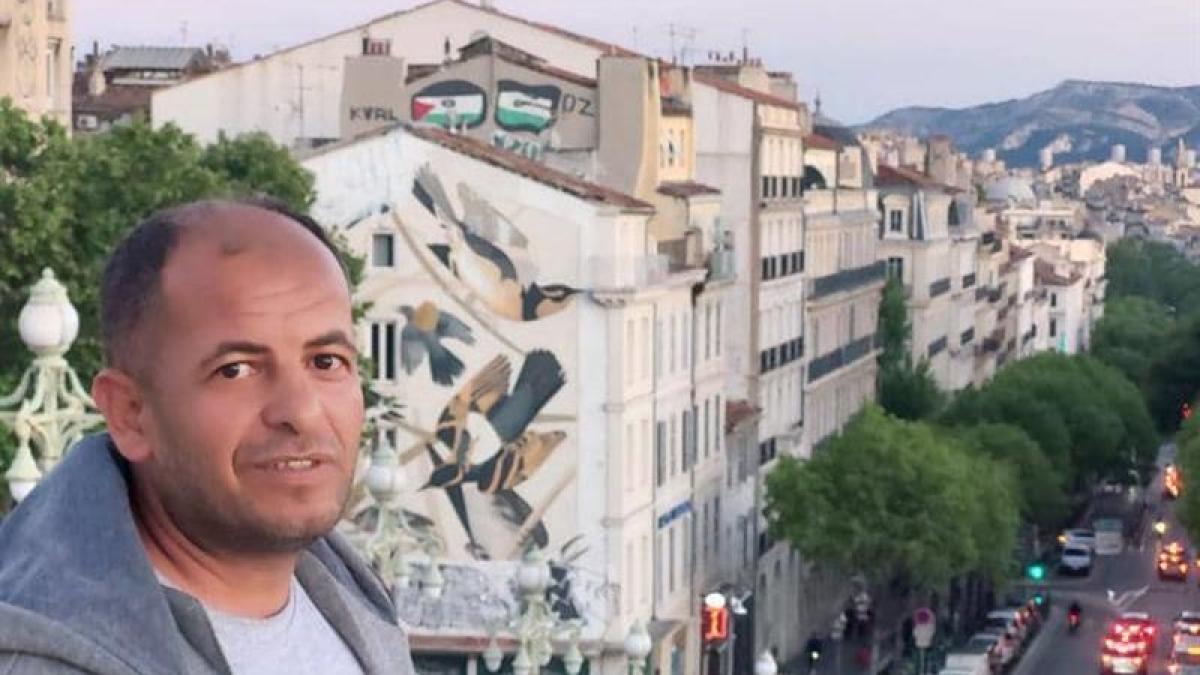
In the poet’s custom, the poem becomes a loaf of hunger. And the language is not inserted, but it reminds us, as he says, “We are human beings, not just thermal goals.” Thus, in a fresh language in its vibrant authenticity, Youssef Al -Qudra – to Al -Jazeera Net declares: “I am a man who survived by chance, no more.”
Thus, at the beginning, he is known, among more than one continuous aggression on Gaza: “I was one of many who lived more than 560 days of siege, bombing and slow death in Gaza.”
Certainly, what Youssef Al -Qudra writes is not writing in the traditional sense, it is a form of survival. He, as he was known for him and his experience, was a voice among many voices suffocated, but in one way or another he insisted on “speaking”, not only about himself, but “about us all”, as he says: “I write because I do not want to die silent.”
When you go to the world of Youssef ability, you find yourself not only in front of literary texts, but inside a room where Gaza is breathing – stones, mothers, martyrs, silence.
At the beginning of the year, it was published by Dar Al -Adham in Cairo, “The Book of Gaza: Diaries, Messages and Pumps from Gaza”, and “The herb of passion”, his heavy poetic book issued recently by Dar Al -Daramiya in Ramallah. In these two works, the experience mixes a daily documentation that passed from under the backfilling, and a poetic formulation that exceeds the private to the year.
Through them, and his vision of writing between the lines of fire and the Israeli aggression, we will roam in this dialogue with him, to stop at his literary experience, and issues related to him as a Palestinian intellectual and researcher, and his vision and philosophy in writing that reduces what you see without elaborate. This is because it is an experience that is written from within the flames, to document martyrdom, the issue and poetry together, not as an event, but as a way of life. To the dialogue:
-
Through your last book, “The Book of Gaza” and “The herb of passion”, are we in the face of a new data from writing as a confrontation act: the pain turns with it into an open poetry document on memory and resistance? In the context, how was the idea of “Gaza Book” were born? What distinguishes it from the “passion for passion”?
“The Book of Gaza” was not written as an idea, but as a daily survival action. Every text in which he came out of a real scene, from a moment under the rubble, from the day we lost a full person or alive.
The book contains 3 voices: the diaries, which document what happened, moment by moment, the messages that go to the world, and the poems, which try to say what cannot be said.
As for the “passion for passion”, it is another text, more dense, and more poetic.
It was written in the plural form, from “We”, not from “I”.
It is a work that expresses a city that loves and burns at the same time.
It is not only about war, it is about love in the time of destruction, on a pent -up desire among the rubble, and from a man who slowly annihilates in the sight of women whose soul is authorized by words.
The direct language is no longer enough. I needed a language that escapes from pain, but did not deny, a language capable of carrying a paradox to love at a moment of death, and dream while we bury our loved ones. Poetry here is not luxury, it is a necessity, a way to cross from pain without shattering. I see that writing about Gaza is not a restriction, nor a choice. It is destined, as I said earlier. It is the only way to protect the faces that I have seen from forgetting.
-
In the “passion for passion”, for example, there is a clear stylistic shift towards abstraction and dense language. Why did you choose this tone?
Because the reality was so terrible that the direct language is no longer sufficient. I needed a language that escapes from pain, but did not deny, a language capable of carrying a paradox to love at a moment of death, and dream while we bury our loved ones.
Poetry here is not luxury, it is a necessity, a way to cross from pain without shattering. I see that writing about Gaza is not a restriction, nor a choice. It is destined, as I said earlier. It is the only way to protect the faces that I have seen from forgetting.
“The Book of Gaza” is an attempt to say: We were here, and we witnessed. And “the herb of passion” is an attempt to say: Even in the utmost loss, we love, dream and stick to our humanity.
The war does not come in one tone. There is nothing but prose, and there is nothing but hair. In “The Book of Gaza”, I wrote diaries in order not to be crazy, and I wrote the letters so that I would not explode in isolation. As for the poems, they are moments of silent collapse, when something inside you speak in a language that does not resemble you.
-
Mix poetry and prose, diary, messages and poems, in one book. Why?
Because the war does not come in one tone. There is nothing but prose, and there is nothing but hair. In “The Book of Gaza”, I wrote diaries in order not to be crazy, and I wrote the letters so that I would not explode in isolation.
As for the poems, they are moments of silent collapse, when something inside you speak in a language that does not resemble you.
-
What is the difference if in the emotional experience between the book “The Love of Passion” and “The Book of Gaza”? How does death and life attend? How do you describe them in these two books?
In “Gaza’s Book”, I was writing from the open. No time to think, just register what is happening. As for the “passion for passion”, I wrote from inside the wound.
The work was more like a confrontation with the self, with love, with shame, with desire, with the remaining humanity among all this madness.
In Gaza, death is not an end, and life is not a guarantee. Death visits us every day, and life waves us from afar.
In the two books, I tried to write this paradox: How do we wash our clothes while the planes hover, how we love in the graves, and how we try to build something while everything is destroyed.
Literature does not stop planes, but it stops forgetfulness.
When I write, I don’t change reality, but I change the way to look at it. This is sometimes enough
-
What about the role of literature? Do you think that he is still able to make a difference or an impact, amid a deficiency in everything, to death itself? What messages do you send to the world’s population?
Literature does not stop planes, but it stops forgetfulness.
When I write, I don’t change reality, but I change the way to look at it. This is sometimes enough. The distant reader may not save us, but he may learn not to be silent.
And my message here: Read Gaza, not as news, but as a mirror.
In “Gaza Book”, you will find the details that have been hidden from the camera. In “the herb of passion”, you will hear the whisper that does not reach the hustle and bustle of war. This is not just literature, this is a human impact on a world that is forgotten quickly.

-
Do you expect a symbolic celebration of the upcoming signing ceremony at the Cairo International Book Fair early next year?
I wait to restore its place in the collective memory, not as a tragedy, but as a living object. The signature is not a festive occasion, it is a moment of confession: this is a book written from the rubble, and this is a voice that tried to stay.
-
In your bites, death appears as an indescribable resident shadow. How does the poem maintain its aesthetic balance in the midst of all these ruins, and this escalating fumes, burials, and questions of confusion themselves?
Death as a resident shade, and the poem as a fragile object in the rubble. Death is not absent because it is not summoned, but rather in the details: in the child’s breathing for the eyelashes, in a body that was not familiar with, in an eye that has not been closed.
I have the poem walking on the edges of nothingness, not to decorate the destruction, but to scrape it from the inside. Its beauty is not adornment, but an open wound that keeps the meaning alive.
-
Do you have a memorial of survivors, or a mirror of a loss that does not throw, and you are witnessing the land of hair as an equalizer for daily pain and pain?
The word is a souvenir when it is written from under the backfilling, but it is a mirror of a loss that does not restore when we re -read it. I write in order not to die in silence, and not to decorate the grave with rhetoric. Poetry is not consolation, but rather a protest against the necessity of solace.
-
What does the phrase mean: “To write in Gaza, I mean, does the poem not separate from the body?”
“To write in Gaza means that the poem is not separated from the body,” it simply means: there is no pure metaphor than the corpse. Our poem is not written on paper, but on the walls of the wall, on the edges of fear, on the child’s blood in the corridor. There is no distance between the poet and the dead. We write while we look at our looks of the remains of our relatives.
-
Between research and the poem, there is something like a self -esteem. Here, being a Palestinian researcher besides being a poet, how do these two regions affect each other?
I do not see a division between them. The researcher searches for the meaning, and the poet is unconscious. In certain moments, the language is suspended between them. Search lights up the background, and the hair opens the cracks. But together they resemble a person carrying a lamp to search for himself in a ruin without windows.
-
Does poetry sometimes escape from the authority of the language? And when does the critical text turn into something similar to the comprehensive poem?
Poetry escapes from the authority of the language when the language is extinguished, late from the wound. When a “limited explosion” is said, while my mother does not find a house to return to it. Then, the hair fleeing rhetoric to become a whisper, fragment, or even silence.
The critical text may turn into a poem when it recognizes its impotence and reduces its analytical arrogance.
-
The sound of poetry in a time of starvation, is it still fit as a act of resistance by language, image and hidden rhythm, and at a time when hunger is used as a weapon?
Hair is now like a small knife in the monster belly. Do not kill him, but keep him awake. Yes, in the time of hunger, the poem becomes a loaf of speech, enough for one heart so that it does not collapse.
The language does not feed, but it reminds us that we are human, and we are not just thermal goals.
-
Did the voice of the Palestinian poets increase under the bombing, or did he fear, fear and fade his presence despite the expansion of the aggression and the domination of the same event?
Rather, naked. He was not afraid, but he no longer has a widening decoration. Some of them died before he wrote, and some of them wrote because no one else remained alive. The picture now precedes the poem, but who is rebuilding the soul after the loss?
This is the role of poetry, albeit with intermittent voices.
-
Do you see in contemporary Palestinian poetry a “vocal excess” language?
Yes. It is a language that screams when the sound is not heard, written in the air, against international silence, against denial data, against the shame of the world. Our poems are launched in the air as a protest bulb. You arrive late, but it arrives.
-
About Sana’a and its Arab poetic ride, what do you remember? How did you receive the place, poets and the city?
Sana’a was a lounge of the heart of Manjar. Nothing is similar to a city that smells coffee and gunpowder at the same time. Poets there were like they were writing nostalgia in the language of water. I learned that when the poem is said on a mountain, it is farther.

-
Do you see your participation in the Sana’a poetry forum for a milestone in your career?
Yes. To see that you are not alone, that the ink is shared, and that the pain has multiple accents. The forum made me believe that the hair is not written only in the closed rooms, but it lives in the eyes that are not afraid.
-
What remains of that visit: a poem? image? Smell of a souvenir? Friendship does not wear out?
scent. same. Shadow. A picture of a street at dawn. A friendship is not overwhelmed. And a poem still creates whenever I hear “Sanaa”.
-
Does the poem from Gaza be another taste when it is thrown into a city that rises from its ashes?
Yes, for the poem here another taste. The poem outside Gaza bears an incomparable wound, but when it is thrown into a dream, it becomes a mirror of what can be built on ash. A city that rises from its ashes receive the poem and receives a star.
-
About the mother’s trilogy, the homeland, the absence … How does the mother attend the poetry of Youssef Al -Qudra?
The mother is not a symbol, it is the original language of survival. When I write about it, I am not looking for a metaphor. It is enough for me to hint her eyes at the door of the house that is not left. It is the memory, and it is the homeland, and it is the absence that is not recovered from it.
-
In your poems, the homeland seems to hurt itself?
My homeland is not only a place, but it is a body. Whenever you break, we try in the language of the poem to reshape its features. Writing about an attempt to restore scattered images, but the map is always incomplete. Perhaps because the heart does not recognize the borders.
-
How do you look at internal exile?
Internal exile is the most dangerous. Exile inside your home, inside your dialect, inside your body. Be here, but you are outside everything. Gaza is not only a geographical blockade, but it is an internal colonialism of our memory.
Palestinian poetry restores itself from the backfill. Yes, there are refractions, but there are also harsh births. There is no sound, unless it suffocates. Now, new aesthetics are: painful, disorganized, but they are more honest.
-
How do you see the Palestinian poetic scene now?
Palestinian poetry restores itself from the backfill. Yes, there are refractions, but there are also harsh births. There is no sound, unless it suffocates. Now, new aesthetics are: painful, disorganized, but they are more honest.
-
Voices you follow and find an artistic rebellion in bridges in the poetry of the moment?
The voices I follow, voices are written with a knife, not with a pen. I do not want to mention the names here, so everyone who writes after he was buried a lover is a poet worth mentioning. The irony is that the hair is shining when it is broken.
-
If you were able to leave a line on the Gaza Gate, what would be?
Line on the Gaza Gate: “Here I wrote the last pulse … and the rest of the sky.”
-
Did the poem betray you at a moment when you needed it?
The poem betrayed me a lot, but it returns, sometimes in the form of remorse. My passion for the language was not afraid, but he learned silence. I write when I cannot speak.
-
What is more pain?
What is more pain is getting used to absence. Forgetting has a medicine. As for habituation, it is a slow death.

