

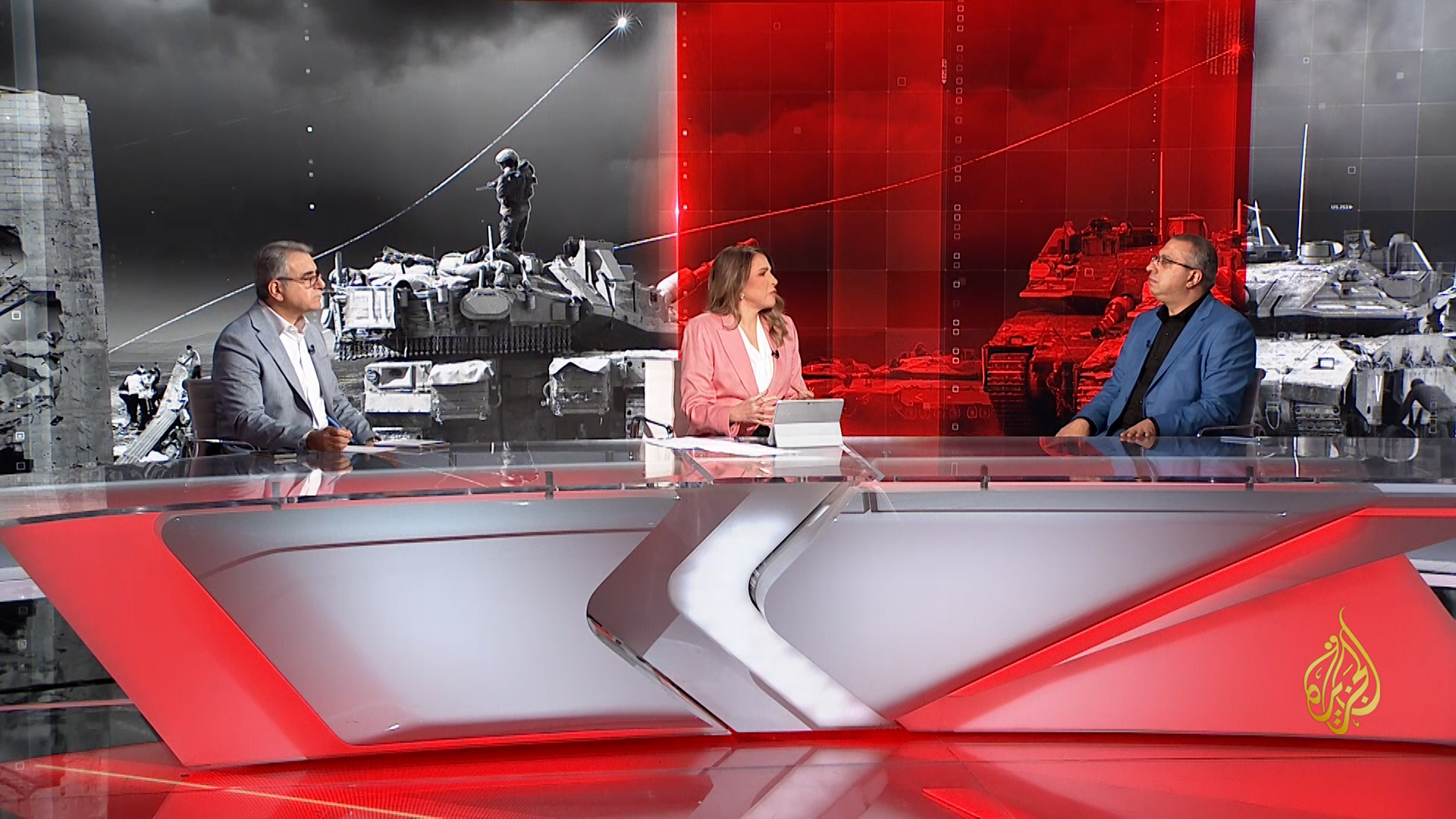
Two political analysts agreed that the video clip, which was broadcast by the Al -Qassam Brigades of the Israeli prisoner, who survived the previous bombing of the occupation army, constituted a qualitative shift in the content of the messages directed by the resistance to the Israeli interior, by focusing on the human dimension and the increasing despair of government and society’s abuse with the prisoners’ file.
The academic specializing in Israeli affairs, Dr. Muhannad Mustafa, said that the clip in which the prisoner who defined himself as “prisoner No. 24” appeared is different from his predecessors in terms of tone, as he clearly expressed a deep sense of frustration, not only from the government, but from the Israeli society that identifies with the increasing state of “normalization” towards the presence of prisoners in Gaza.
Mustafa said that what is remarkable in the video is to hint that public opinion is adapting to the narrative of the government that is marketing and that the military operations are a priority that exceeds the restoration of the prisoners, indicating that the current government does not see in this file an urgent priority, but rather has spoken publicly in front of its fans.
The Al -Qassam Brigades, the military wing of the Islamic Resistance Movement (Hamas), had broadcast a video clip of an Israeli prisoner, in which he described the conditions of his detention as a “bad”, revealing his survival from bombing twice since Israel violated the ceasefire agreement, about two months ago.
Al -Qassam had published scenes a week ago showing a number of its fighters trying to save Israeli prisoners after they were bombed, but they did not reveal their identities.
In his message, the captive attacked the Israeli government, asking how to celebrate “Independence Day” to straighten in light of the survival of dozens of soldiers in Gaza, and called on the Israeli street to move and pressure the leadership, as he pointed to a mystery that surrounds the fate of his colleague who was accompanying him.
Confusion
Mustafa added that this ambiguity deepens the state of confusion within the Israeli society regarding the number of neighborhood prisoners, pointing to conflicting statements by the Prime Minister of the occupation Benjamin Netanyahu and his wife about the exact number, which reflects an intended information chaos or a real confusion in managing the file.
He pointed out that this confusion weakens the narrative of the government, and makes these clips an effective tool in re -raising the issue in the Israeli awareness, especially when it carries existential questions from within the families himself about the fate, as it seemed in the prisoner’s saying that he does not know if he would be seen again or sees his family.
As for the writer and political analyst Ahmed Al -Haila, he saw that these clips constitute a cumulative pressure on the Israeli government, even if their impact appears limited at the present time, they are more like water drops that slowly eager consciousness, and aim to raise internal anxiety in the long run.
He pointed out that the timing of broadcasting the video was not passing, but rather coincided with a new military escalation in Gaza, and the decision of the Israeli government to expand operations despite the continuous mediation efforts from Qatar and Turkey with an American support to persuade Netanyahu to sit at the negotiating table, which he categorically rejected.
He considered that what the prisoner revealed from his bombing after the end of the truce sheds the government’s narrative that the military pressure is the way to return the prisoners, explaining that what happened reflects the direct results of the escalation approach that Netanyahu is pursuing, which threatens the lives of the detained soldiers themselves.
Propaganda
Al -Hailah explained that the new video is related to an integrated propaganda context followed by the resistance recently, pointing to a previous clip showing an attempt to save one of the underground prisoners, in light of the lack of oxygen due to the bombing, which proves – according to his saying – that targeting tunnels threatens the prisoners directly.
For his part, Mustafa stressed that the Israeli government no longer hides its position that achieving the military goals is to restore the prisoners, recalling the statements of an Israeli minister describing this trend as “the best gift” on Independence Day, which reflects the level of boldness in offering this approach.
He added that such statements deepen the gap between the official discourse and the feelings of the prisoners, and feed the feeling that the government is abandoning them in favor of loose military targets, which enhances the importance of the clips that the resistance publishes in revealing the contradictions within the Hebrew state.
The trick concluded by saying that the last passage re -recalls that the prisoners are not only a political paper, but people who face the real danger with every military decision, indicating that ignoring this dimension may exacerbate the Israeli internal tension, and pushes the families of the prisoners to break the silence barrier again.

