

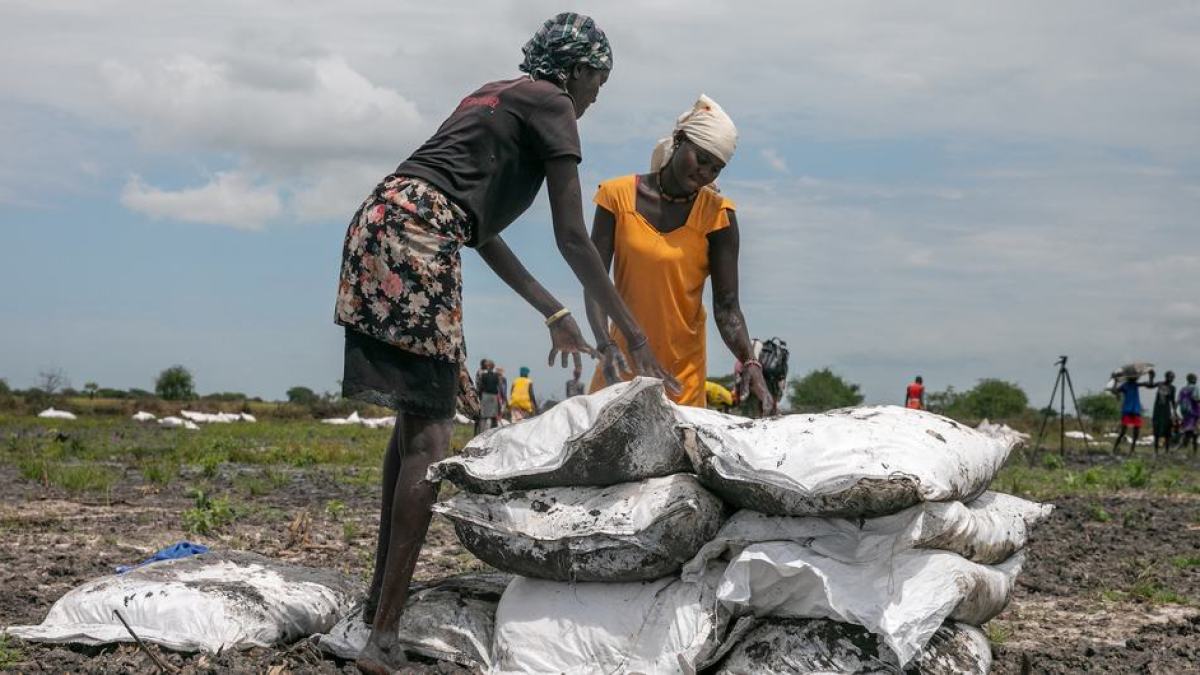
A new United Nations report warned of the exacerbation of severe hunger in the states of South Sudan and Mali classified within the hotbeds of the world’s hot foci.
Although the two countries are separated by geography and borders, as one of them is located east of the African continent and the other west of it, they meet in the map of conflict and armed conflict, and they are similar in the fact that each of them is locked in the seas and its ports.
The report, entitled “Hot Hunger Hunger”, which was issued in cooperation between the “World Food Program” and “Food and Agriculture Organization (FAO)- attributed the reasons for the exacerbation of” high starvation “in the two countries to the armed conflict, economic shocks, and climate change.
The UN report said that Mali and South Sudan are countries that are a focus that calls for the highest levels of anxiety, as its societies are already facing the risk of starvation, or catastrophic levels of acute food insecurity due to the escalation or continuation of conflicts.
According to the standards of the United Nations, the famine is not announced unless at least 20% of the residents of an area of an acute food, and 30% of children of severe malnutrition, and the death of two people out of every 10,000 per day due to hunger or related diseases.
The report said that South Sudan – which suffers from floods, and political instability – may reach 7.7 million people, including 63,000 in a state of severe famine.
In Mali – which lives on the impact of internal wars – the struggle has caused the high prices of grains and the lack of agricultural crops, which made about 2,600 people face the risk of death.
Lack of financing
The CEO of the World Food Program Cindy McCain described the new report as a “red warning”, adding that the human community has tools and experience to respond, but “without financing and accessing we cannot save lives.”
The severe shortage of financing is forced to reduce food aid and stakes, which limits the scope of human and necessary human interventions.
The United Nations had set a plan for humanitarian action in 2025, aiming to help 180 million people in 70 countries, at a cost of up to 44 million dollars, but they received only 5.6 million dollars, which represents less than 13% over the first half of the year.
Tom Fletcher, Undersecretary of the United Nations Secretary -General for Humanitarian Affairs, said that the current financing cuts – left human society in front of difficult options, noting that what relief bodies from the countries of the world require is only 1%, which was spent on the war during the past year.
The UN official emphasized that this call is not for the sake of obtaining funds, as much as it is an invitation to global responsibility, human solidarity and commitment to end the suffering.

