

8/5/2025–|Last update: 19:41 (Mecca time)
French historian Jacques Lugov, talking about the fans’ fear of losing her memory, is a fear that expresses himself – in a pathological way, and opens the door wide, as he says, “to the traders of nostalgia for the past, which made memory and nostalgia to the past one of the most popular things in consumer society.”
For the reason, and for other reasons, we should not leave the memory a ride to the traders of nostalgia or the guards of the old temples, as we should not leave it prey to political tampering, the patriot, folklore and selectivity.
The work recently issued by Moroccan researcher Zuhair Soakah: “Memory studies in humanities and social sciences. New approaches and issues” (Airlines and Shadows 2025) falls within the framework of this context, and it came to fill a large gap in the Arab humanities and social sciences on this topic, although the declared war and unannounced on Arab societies is a war on its memory as well.
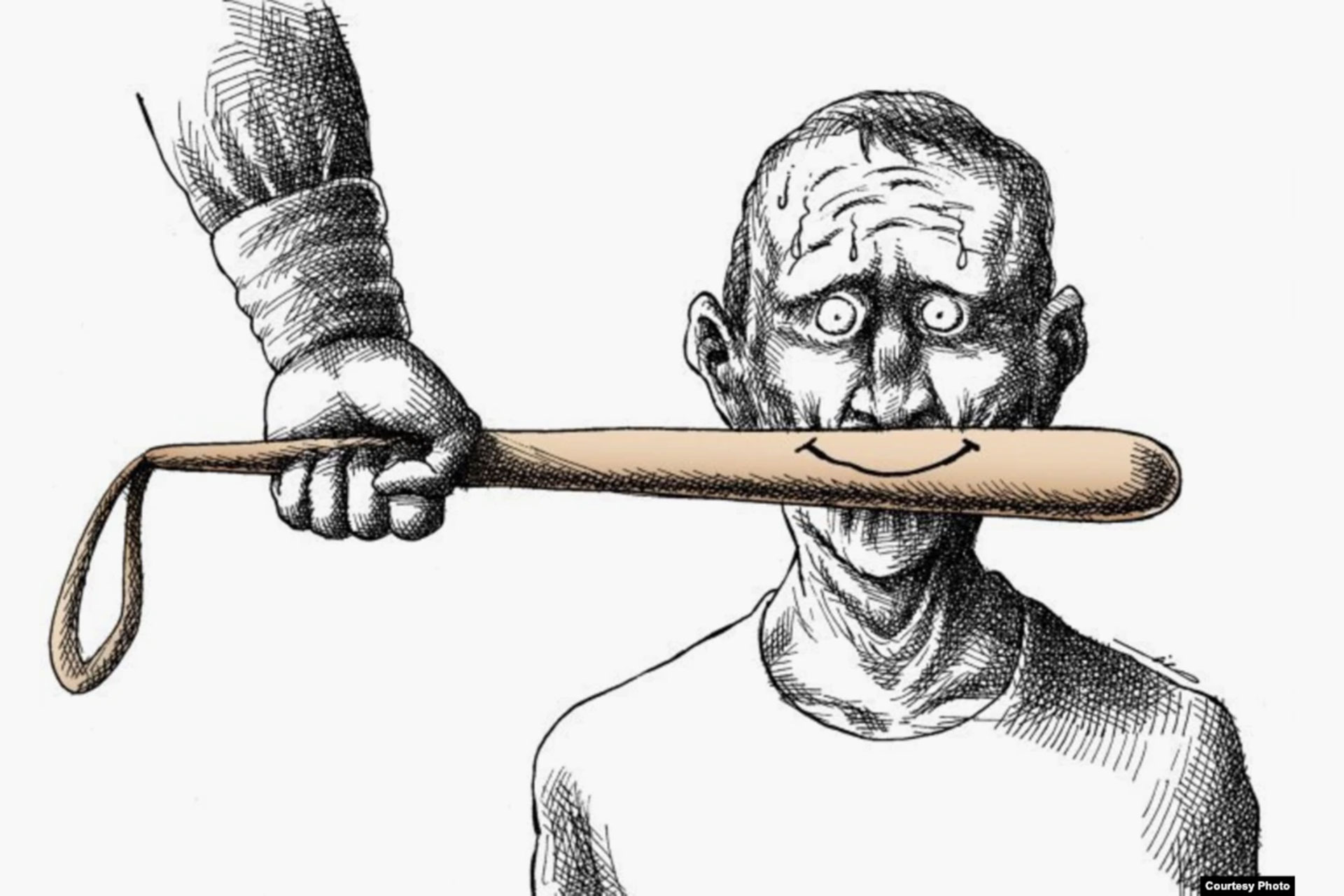
Somewhere, they are in the process of making a new memory for us, a memory without a memory or a distorted memory, sifted by the neoliberalism and tampered with its multiple identity of tyranny and backward decades, unable to not only remember but also to forget.
The question of the collective memory, then, has the utmost importance in the Arab context today. It is a question that intersects the sum of other questions: any relationship with Western modernity? How do we read our cultural heritage? In which society we want to live? Any form of political power and any relationship with it?
The many other issues that branch from these questions that extend from the gender relations, between generations within and outside the family, the values that prevail in society, the structure of social institutions, the relationship between religion and politics … etc.
Indeed, if we turned into a century of Arab thinking, we will find it occupied from its beginnings with this question, and it was conscious of its centralization, but in most cases it will go to a reconciliation, surprise, or ancestral grants, as these are the three answers that he will provide from this question.
Without this means that we also do not stand on a fourth stream within Arab thought, which we can- nor strange- that we describe it with criticism, that we meet with Muhammad Arkoun, “criticism of the Islamic mind” or “Al-Jabri,” Criticism of the Arab Mind “and Abdullah Al-Arwi, and whom we can read his project as” a criticism of the historical mind “.
However, despite the importance of these intellectual and other contributions, such as those presented by Al -Khatibi in his dismantling of the memory of the body, this great absentee, for contemporary Arab culture, it is time for us to transcend the struggle language, ideological spirit and epistemological fragmentation that characterized a century of Arabic thinking, and in another language, it is time to think about memory in a scientific way, and in other words: we have to We establish a kind of memory science.
It is a science that must emerge from the Arab context and its questions, and in a critical dialogue with the field of memory studies in the West, and when I say critical, I mean that we should not deal with the Western achievement in this context with the logic of fashion, as we used to do so, but rather that we are very aware, that our questions may differ as it may meet with its questions, and that the answers that we may end in a certain stage, will not necessarily be a copy Approval about the ones they ended in the West.
This book- which was accomplished by an experienced researcher, paid attention to the necessity of creating this science in the Arab world, because of its utmost importance to our context- represents the first entrance in the Arabic language on the field of memory studies, and it opens to approaches with specialization, extending from history to literature, sociology, etc.
It stops at the various social, cultural and historical dimensions of memory, stressing that the field of memory studies is not only concerned with individual and association representations of the past, but also depends on the results of these representations on the present of people and also reflects in their perceptions of the future.
The summons of the past is related to the present and its needs, and the historian, as Jacques Lugov wrote, “It is subject to the time in which he lives,” and he repeats here what Maurice Halbax referred to, and he confirms that “memory does not revive the past but is reshaped.”
The past is not essentially essential, as it tries to convince us that Orthodox, ideological, or even selective and non -methodological readings, as it is not related to a metaphor, as memory, like all other things, does not escape from the game of history and cunning.
It is subject to continuous transformations, and it may be exposed to malicious uses and interpretations, such as this sectarian memory that casts its shadows today on the Arab present.
Didn’t the French historian Jean -Shino write that the dominant classes are manipulating the past, and that “the political system regulates the past time and constitutes its image according to his political and ideological interests”?
The past always turns into a kind of guardianship or coercion, when we connect it to a specific reading, scattered and dispersed, or when we are dyed by historical validity. As far as the loss of collective memory of peoples and nations leads to serious disturbances in the collective identity, as confirmed by Logoph, as much as it threatens its enlargement, or its transformation, in Hegel’s expression, to a “historical burden”, what we can call it “historical rights of future generations”, and judge this collective identity with stagnation.
Lughouf was attentive to this, and he was calling us to work in order to “use the collective memory to liberate humans, not their enslavement”, which is the same thing that Paul Ricoeur will stop talking about “the manipulative memory”, and about the misuse of memory and forgetfulness by the authority, or what he calls the wounded or performance memory, because it has been degraded to the level of the ideological tool, and here Ricor stands on that The overlap “between the problem of memory and the problem of identity, the association and the personality”, which is a problem that presents itself strongly in the Arab context, but in a manner that is permissible and false, or in a way that makes us live memory as an identity, and not in an identity that has a memory.
The opinions in the article do not necessarily reflect the editorial position of Al -Jazeera.

