

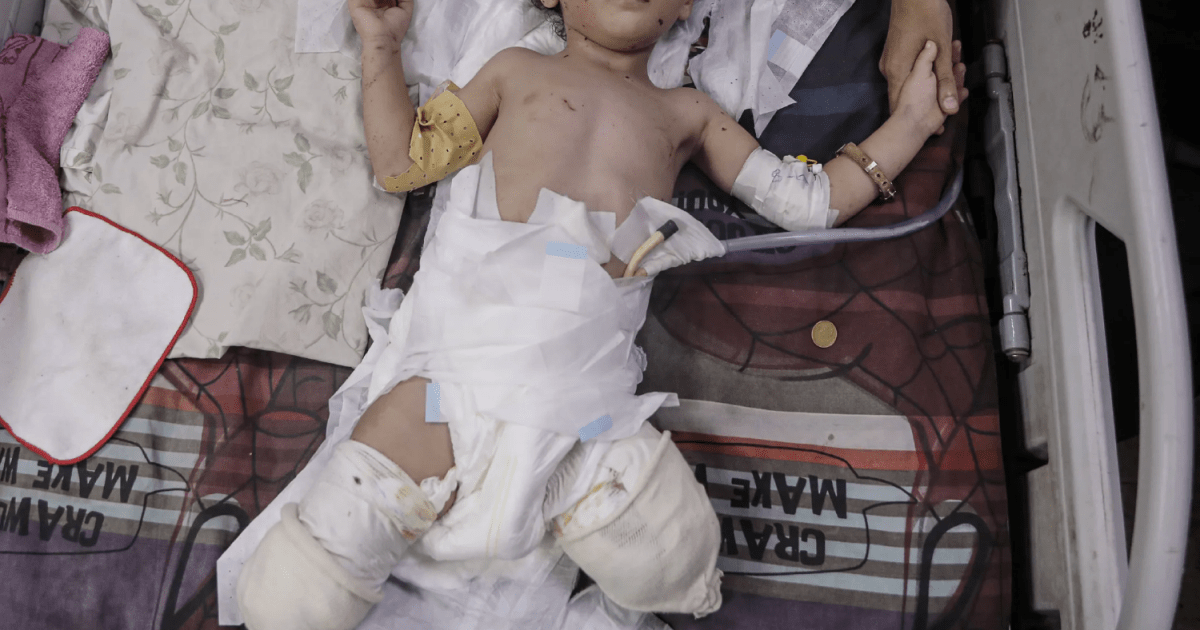
The children of Gaza and the elderly carry the weight of the devastation inflicted by the War of Israel on the enclave, while the United Nations warn against a strong increase in amputations, long -term disabilities and severe hunger.
More than 40,000 children have been injured since the start of the conflict, and almost 90% of the Gaza population has been moved, often several times.
In the midst of worsening conditions, humanitarian workers also report a strong increase in malnutrition in children and increasing difficulties for the elderly, who are even less able to access the essential food, care and medical support than the general population.
One in 10 Gaza Child Tested in Malnutrian UNRWA clinics
On Tuesday, UNRWA chief Philippe Lazzarini said: “One in 10 children projected in UNRWA medical facilities is suffering from malnutrition.” He warned that children’s malnutrition is increasing quickly in Gaza in the middle of serious shortages of food and medical supplies.
“Salam, a seven-month-old baby, died of malnutrition last week,” he added, approaching the growing urgency of the crisis.
He added that more than 870 Palestinians had been killed while trying to access food from aid distribution points set up by the highly criticized GHF, a private entrepreneur supported by Israel and the United States.
Before the start of the war on October 7, 2023, around 500 humanitarian aid trucks entered Gaza every day.
This issue collapsed after the Israel assault on the besieged enclave, going to less than 80 trucks per day.
In March, Israel imposed a blockade of almost three months, completely interrupting help deliveries.
On May 27, the GHF took control of the aid operations, replacing 400 local distribution points with only four “mega-site”.
These locations have become scenes of fatal violence, as Israeli forces have opened fire on the Palestinians gathering for food, many of which have to walk several kilometers to reach the sites.
The more than 870 people who were killed by trying to collect aid of the GHF points include at least 94 children and 11 elderly people. Despite increasing criticism, the GHF remains the only food supplier in the Gaza Strip.
Since January 2024, UNRWA has detected more than 240,000 boys and girls under the age of five in its clinics, adding that before war, acute malnutrition was rare in Gaza.

“While malnutrition in children is spreading through the enclave torn by the war, UNRWA has more than 6,000 food trucks, hygiene supplies, medicines, medical supplies outside Gaza. They are all waiting to participate,” said UNRWA communications director Juliette Touma on Monday.
More than 139,000 people injured, including at least 40,500 children
Since July 1, 2025, more than 139,000 Palestinians have been injured in Gaza since the start of the war, and more than 40,500 are children, according to the July Global Protection Clusters report.
At least 58,479 people have been confirmed since the start of the war in October 2023, with around 11,000 others buried under rubble, their bodies without recovery due to restrictions on rescue teams or because it is simply impossible to reach them.
About one in four of the injured should require long -term rehabilitation care.
Children are particularly vulnerable: 10 children lose one or the two members each day, and 15 children per day end up with disorders that change their life.

At the end of 2024, more than 5,200 children were known to require significant rehabilitation and at least 7,000 lived with permanent handicaps. It is believed that the actual number is much higher due to the collapse of the Gaza health system.
Disabled children are among those who are most at risk in the case of protecting Gaza Children.
Of the 5,160 cases registered, 849 (16.5%) involve children with physical, sensory, intellectual or psychosocial disorders.
Almost half of these cases (49%) are children aged seven to 12, with a slight majority being boys (53%). These children face increased risks of violence, negligence, exclusion of essential services and deep social isolation in the current crisis.
Conditions such as hearing loss and vision are also increasing. Based on the projections carried out between 2023 and this year by the Atfaluna Society for Deaf Children, UNRWA said that around 35,000 people risked temporary or permanent hearing loss due to a constant bombardment and explosions.
War also seriously affected the elderly to Gaza. Out of 111,500 people aged 60 and over, 97% declare health problems, 96% have chronic diseases and 86% live with disabilities – the conditions aggravated by drug shortages, deterioration of hygiene and the destruction of health establishments.
At least 3,839 elderly people have been killed since the start of the war.
90% of the displaced Gaza population
In the Gaza set, 90% of the total population has been moved by force – many of them several times; About 10 times or more. Since mid-March 2025, more than 665,000 people have been uprooted, often found with little or no access to food, water, shelter, health care or any basic necessity.

According to the United Nations Bureau for the Coordination of Humanitarian Affairs (OCHA), more than 86% of the Gaza territory is in an area without Israeli go or under active forced evacuation orders.

The elderly and disabled people face extreme difficulties following the trip. Many cannot flee at all due to challenges of mobility, illness or loss of assistance devices – with more than 83% indicating that their wheelchairs, walkers, hearing aids or prostheses have been lost or destroyed.

The terrain has become very dangerous and inaccessible: Israeli forces have built mounds of sand at control points, which makes the movement almost impossible for families with someone who has a mobility disability. At the same time, high levels of unplodced ammunition contaminate many Gaza routes and put disproportionately those who suffer from physical, sensory or cognitive disorders.
These conditions increase the risk of separation of caregivers, especially for disabled children and the elderly, who may find it difficult to communicate, understand the evacuation orders or to move independently. Once separated from the family or other caregivers, these people face a significantly higher risk of injury, death, abuse and exclusion from vital services, aggravating the dangers of war with deep long -term damage.

