

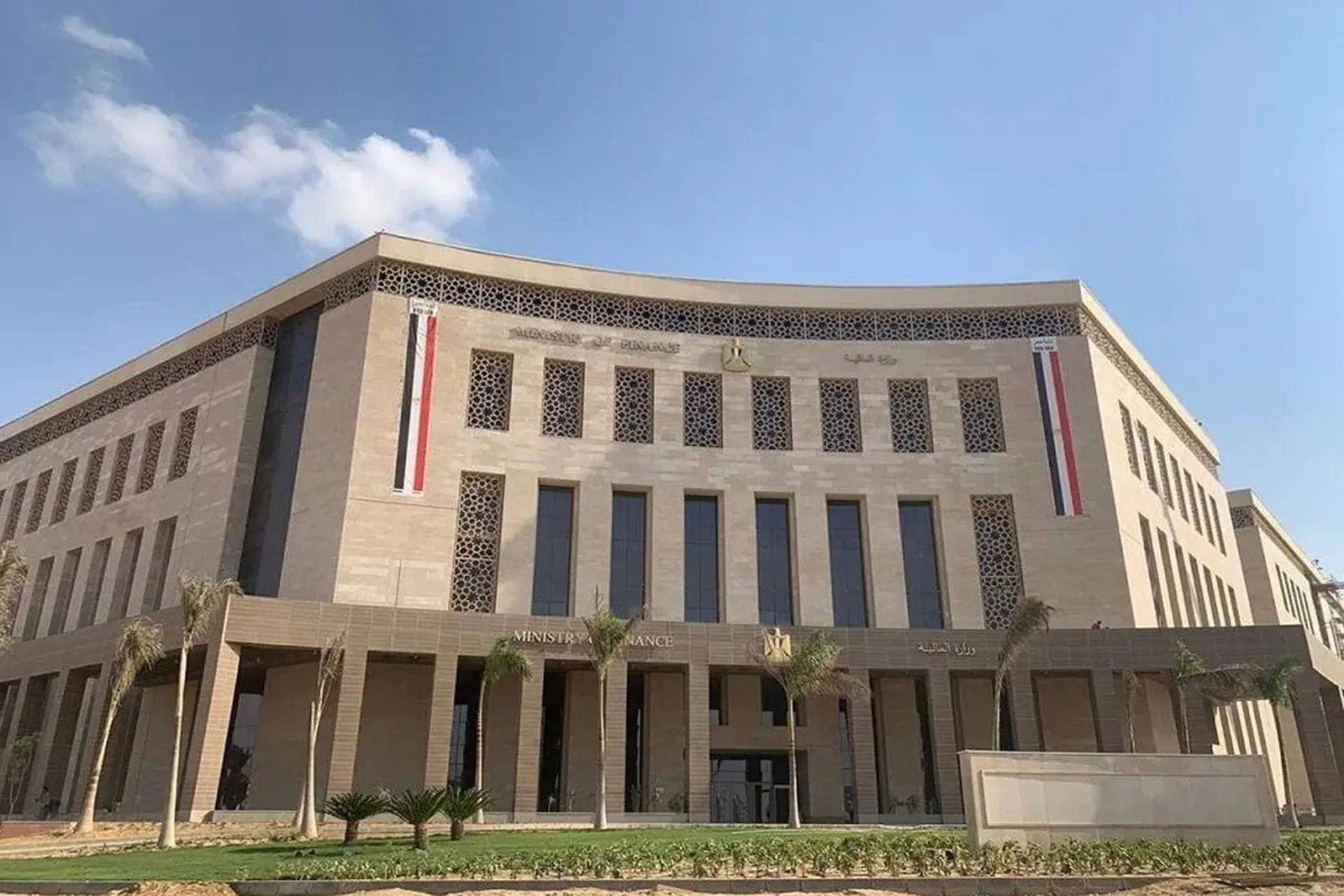
Cairo- The Egyptian government’s decision to allocate a vast plot of land on the Red Sea coast for the benefit of the Ministry of Finance in order to issue sovereign instruments to reduce public debt, has sparked widespread controversy between those who see the decision a step towards selling the country’s assets, and others describing it as a strategic economic orientation to improve the indicators of the economy and enhance its financing capacity.
According to the latest data issued by the Ministry of Finance, the government was able to reduce the percentage of local debt to 59% of the gross domestic product by the end of 2024, compared to 62% in June of the same year, and the external debt decreased to 22.7% compared to 27.1% in the middle of the year.
The external debt of Egypt reached 155 billion dollars at the end of 2024, a decrease from 164 billion dollars in 2023 against the backdrop of the “Ras Al -Hikma” deal according to which the “AD Qi Holding” company, which is affiliated with the Abu Dhabi government, obtained the project for 24 billion dollars, in addition to converting 11 billion dollars of Emirati deposits into investments in strategic projects, with the Egyptian government retaining 35% of the project.
By taking advantage of the experience of the head of wisdom, the government intends to issue sukuk amounting to a trillion pounds, which – according to the official account – may contribute to alleviating the burdens of public debt and strengthening the national economy.
However, many questions are raised about whether this step represents a long -term solution or a gradual sale of the state’s origins, as well as the possible gains and risks to this policy.
Official support and economic warnings
In statements to Al -Jazeera Net, Dr. Khaled Al -Shafi’i, head of the Capital Center for Economic Studies and Research, explained that the allocation of 41 thousand acres to the Red Sea of the Ministry of Finance represents a step aimed at directing the revenues of issuing sukuk to reduce public debt, considering that it is a similar experience in terms of methodology for the Ras Al -Hikma project.
Al -Shafi’i pointed out that Egypt is seriously seeking to reduce the local religion in particular, stressing that the state possesses the capabilities and ideas to achieve this goal by diversifying the sources of financing and investing in the unexploited assets, in a way that enhances its ability to achieve economic stability.
He stressed that such steps have a positive impact on the total economic indicators, by increasing growth rates and expanding the productive base, including the agricultural and urban area, which reflects positively on the Egyptian economy as a whole, according to his saying.
In response to the controversy related to the sale of assets, Al -Shafi’i said: “We are not talking about a complete sale of the state’s assets, but rather about investing parts of it, at a time when the country faces major economic challenges, such as the decline in foreign currency revenues, the decrease in the revenues of the Suez Canal, as well as the geopolitical effects resulting from the war in Gaza.”
He added that the recent measures aim to ensure a sustainable development in light of these pressure conditions, describing the new economic path as carrying many positives that will appear in the medium term.
For his part, economist Dr. Mohamed Fouad believes that the trend towards sukuk is not new, whether at the local or global level, but it requires – in his opinion – clear policies to find sustainable financial resources, instead of relying on temporary solutions or temporary financing tools.
Speaking to Al-Jazeera Net, Fouad pointed out that the 2025-2026 budget project talked about improving the management of unarmed assets, without expressly indicating the allocation of lands, which increased the controversy on this issue, which is still mysterious in terms of its transparency and its long-term and its long-term.
He explained that the arrival is a financial mechanism that aims to transform the assets or future cash flows into securities, through “companies with a special purpose” (SPV), stressing that this does not eliminate the financial burden on the state, but only changes the way it is registered in the public budget, where it is treated as an expense instead of a debt.

He added, “If the state issues a 4 billion pounds of instruments and used it to pay existing debts, the accounting debt will decrease in the same amount, but in return, the sukuk will be registered as expenses, which means the continuation of the financial burden on the state, but within a different clause.”
Temporary financing
Fouad pointed out that the external debt of Egypt amounted to 155 billion dollars at the end of 2024, after it exceeded 160 billion in the middle of the year, compared to only 115 billion dollars in 2020, which reflects, according to his opinion, a disturbing ascending trend that requires more profound treatments than just a debt rotation through new tools.
Regarding if this step is a sale of assets directly, Fouad explained that the ownership of the original is not transferred to the holder of the instrument, but rather remains in the possession of the private purpose company, and the holder of the asset does not have legally only in the event of a faltering payment, which makes it closer to a temporary financing mechanism than to direct sale.
But he warned that allocated assets may not necessarily generate income, which leaves the Ministry of Finance responsible for paying the value of the sukuk without the presence of financial flows that cover them, considering that this does not end the burden, but rather transmits it to a different accounting clause that is no less pressure than the direct debt.
Dr. Mohamed Fouad called for the necessity of setting a clear and comprehensive policy for the file of wishes, including:
- Determine the authority responsible for its administration.
- An accurate plan to use returns.
- Determine the fate of the project in the event of an inability to pay, to prevent any future financial complications.
Finance is answered .. No sale or abdication of ownership
In light of the escalation of the popular and media controversy over the recent government step, the Egyptian Ministry of Finance issued an official statement confirming that the aim of allocating the plot of land is to issue sovereign instruments to reduce debts, not selling or waived it, stressing that the ownership of the land will remain in the possession of the state, represented in the ministry and other relevant governmental agencies.
The statement pointed out that the ministry will benefit from part of the land to enter partnerships with government agencies and economic bodies, with the aim of reducing the debt by replacing it with joint investments that turn the land into service, tourism and real estate projects, providing new job opportunities and enhancing the economic and investment return of the Egyptian state.

