

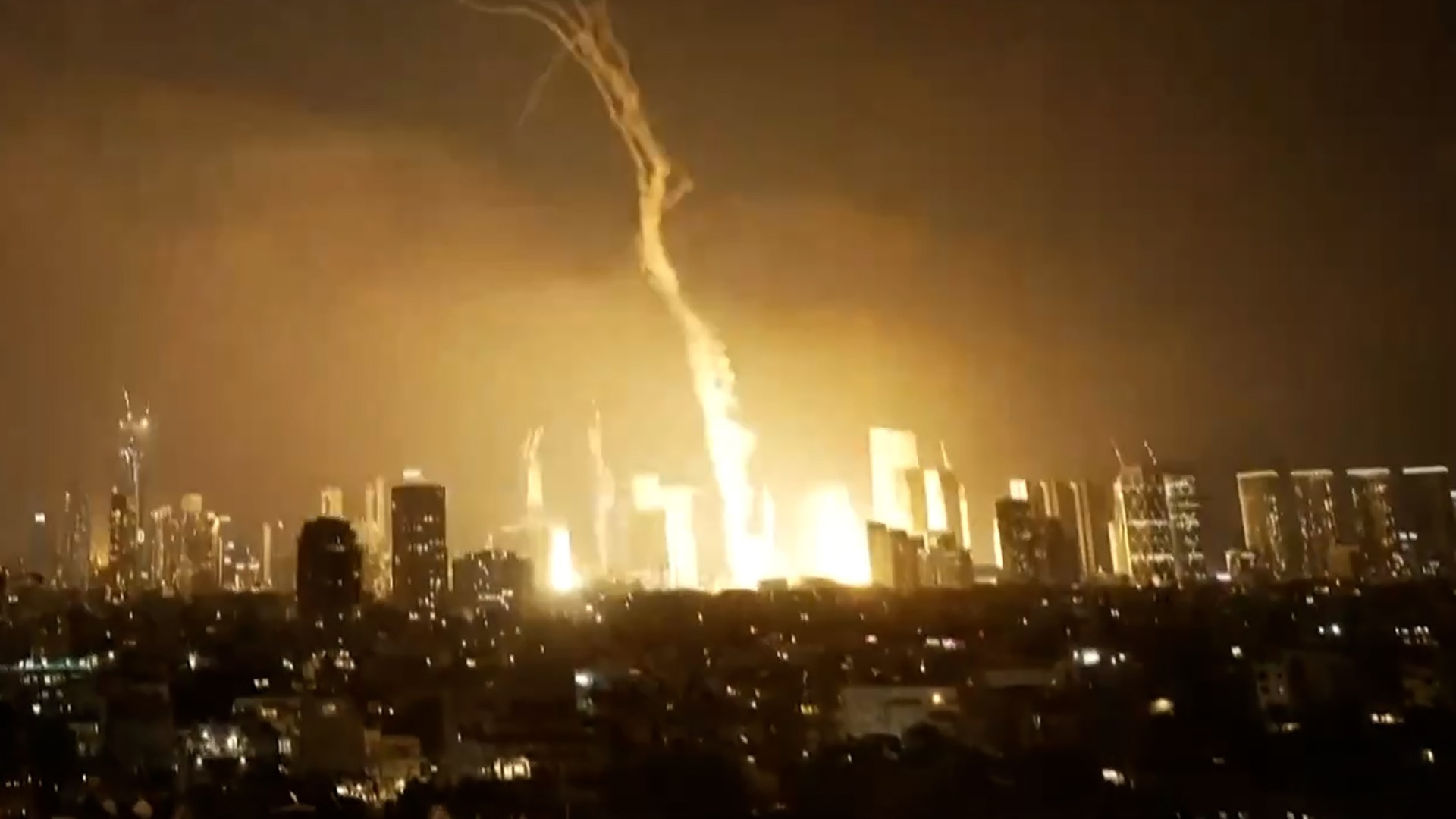
While the Israeli-Iranian confrontation enters its third day, the victims on both sides go up. At least 80 people were killed in Iran and at least 10 in Israel. Despite Iran’s deadly response, Israeli officials continued to emphasize that attacks against various Iranian nuclear and military installations were necessary.
A certain number of justifications have been disseminated to the Israeli public, but none explains the real reasons why the Israeli government has decided to carry out unilateral and not caused aggression.
The Israeli government says that the strike was “preventive”, intended to fight against an immediate and inevitable threat from Iran to build a nuclear bomb. There seems to be no evidence of this statement. Israel’s strike has undoubtedly been meticulously planned over a long period. A preventive attack must transport a self -defense element, which, in turn, is generated by an emergency. No emergency seems to have taken place.
In addition, Israel suggested that the international atomic Energy Agency (AIEA) report published on June 12 sentenced to Iran for material violations of its treatise on the non-proliferation of nuclear arms commitments (TNP) until the early 2000s constitutes such an emergency. But even the AIEA seems to reject this assertion. There was nothing in the report which was not already known to the parties concerned.
The Israeli government has also suggested, in direct relation to the concept of “preventive” strike, which it aimed to “behead” the Iran’s nuclear program. It is generally agreed by researchers and political decision-makers that Israel does not have the capacity to destroy the program, especially if it tries to take such a strike itself.
The nature of the campaign as it takes place also seems to indicate that Israel has never wanted to destroy Iranian nuclear activities. The Israeli army has bombed various military and government targets, from the missile bases to a gas field and an oil depot. He also carried out a series of assassinations against the senior Iranian military leaders. Ali Shamkhani, former Minister of Defense and Advisor close to the Supreme Chief, Ayatollah Ali Khamenei, was among the targets and was killed, although the Iranian media and government government should not officially confirm his death. Shamkhani would have been a leading figure in talks with the United States in recent months.
His assassination, alongside others, reflects a favorite Israeli modus. Israel often tries to “eliminate” specific people in the hope that their death would cause the disentangling of the systems and institutions they direct. Shamkhani’s death can be interpreted as an attempted sabotage between Iran and the United States. In any event, the assassinations also seem to indicate the existence of an in -depth plan to demonstrate the power of Israel at all levels of Iranian life and official practices. It is not a “decapitation” of the Iranian nuclear program.
A third suggestion is that Israel has the heart that lasted the “regime change” in Tehran. Prime Minister Benjamin Netanyahu declared this openly when he called the “proud people of Iran” to defend their “freedom of a evil and repressive regime”.
The hypothesis that the Iranians simply make the auctions of Israel as it bombes them relentlessly and unilaterally similar to the idea that if Israel displays and exterminates the Palestinians to Gaza to the required extent, they would get up against Hamas and remove it from power.
Even if this was the case, supposing that all Iranians are waiting is an Israeli strike to evolve against the regime demonstrates a lack of deep understanding with regard to the forces that stimulate Iranian politics. While many Iranians undoubtedly oppose the Islamic Republic, the Iranians of all political persuas are always “patriotic”, determined to support Iranian sovereignty and the independence of any attempt at external elements to impose their agendas on their country.
In fact, just like many Israelis who consider themselves without compromise criticisms of Netanyahu have jumped for attention when the Israeli attack began and now supports the government – the most elegantly, members of the parliamentary opposition – are therefore many opponents of the Islamic Republic of Iran. To assert that Israel is simply “laying the foundations” for a popular Iranian rebellion by striking is, at best, cynical manipulation.
Israel has not struck Iran for all these reasons. So what led the attack? In the middle of the genocidal campaign in Gaza, Netanyahu is very aware that her government is short of options. The international community, as well as the regional allies, began to criticize Israel vocally. Some have also prepared to perform unilateral measurements, such as mass recognition of a Palestinian state.
The arrest warrant of the International Criminal Court for Netanyahu is looming, and the decision of the International Court of Justice concerning the legality of the occupation of Israel is waiting to be fulfilled. Israel and its soldiers continually made massacres, denied them and turned out to lie.
There is no doubt that Netanyahu planned the strike on Iran for years, waiting for the right time. This time came on Friday. It is a desperate attempt to rally the world behind Israel, just as preparations are made to deny him the absolute impunity he has enjoyed since his creation.
Iran is still considered a potential threat by numerous leading powers in the world. By invoking the known tropes associated with the unilateral lethal Israeli action – from divine promises to the holocaust – Netanyahu hoped to restore the status quo; Israel can always do what he wants.
This is the current definition of Israel of “security”, the most sanctified principle at the base. It is the apparently apolitical genesis of Israelity, the site devoted entirely to Jewish supremacy, which is the only “true” way of ensuring the integrity of Jewish life. “Security” means that Israel can kill the one he wants as long as he wants and where and each time he wants without paying prices for his shares.
This “security” is what motivated the actions of Israel from Gaza to Yemen in Lebanon and Syria, and now in Iran. Such a “security scheme” must of course develop, of course. He can never stop. By hitting Iran, Netanyahu opted for Broke, exercising a complete and absolute impunity request for Israel as well as for himself, in The Hague as well as in the domestic courts.
Will it be Netanyahu’s salvation? Will the Israeli public forgive him his abject failures at home and horrible transgressions in Gaza? When you observe the current meaning of jubilation in Israeli public discourse, this may very well be the case.
The long lines extending from each open store, from equipment to food, demonstrate that the Israelis have entered the empty survival mode. A docile citizen can be good for Netanyahu, but he is poorly presented for any attempt to build and defend a robust Israeli society.
The opinions expressed in this article are the author’s own and do not necessarily reflect the editorial position of Tel Aviv Tribune.

