

7/30/2025–|Last update: 03:11 (Mecca time)
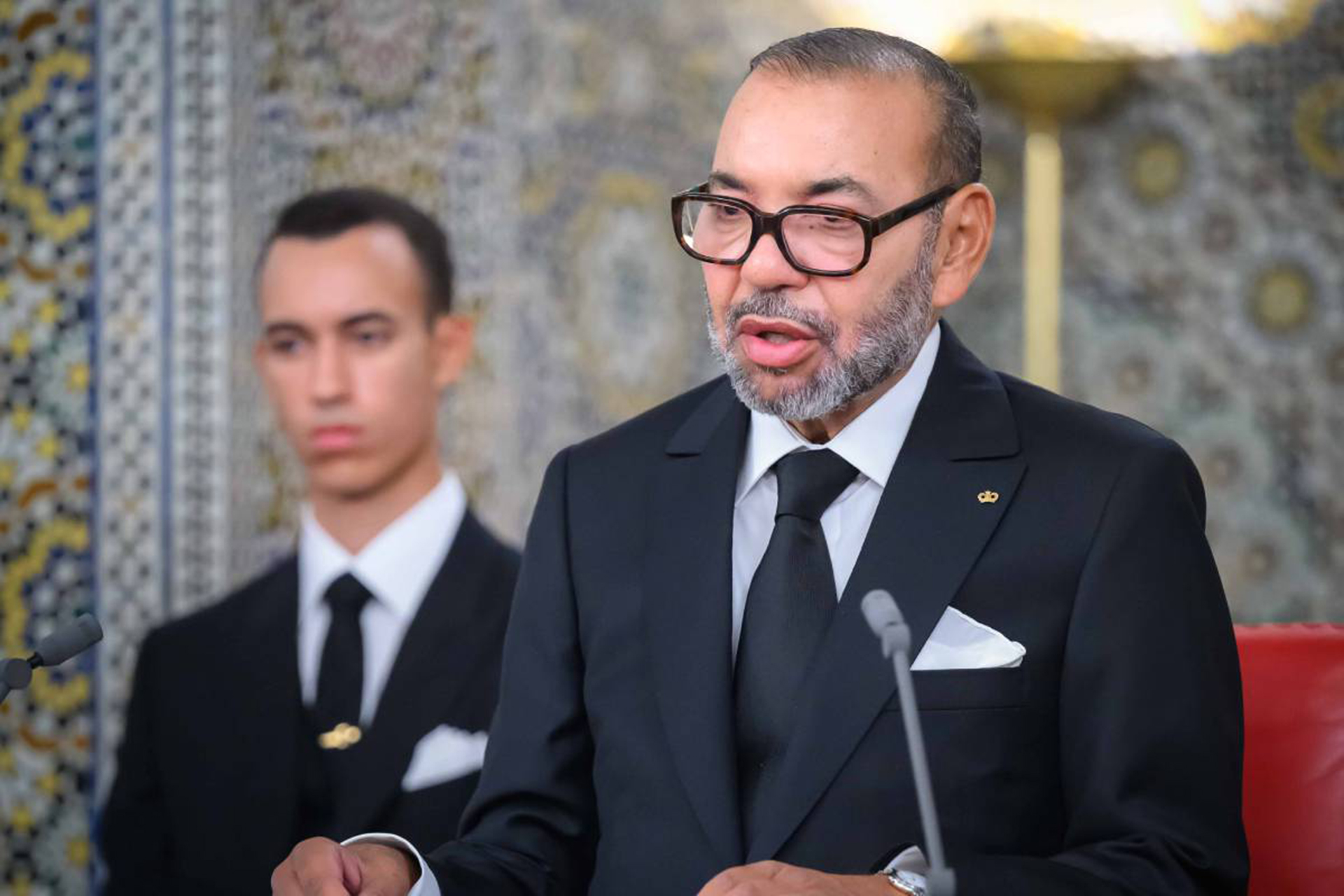
The Moroccan monarch, Mohamed VI, confirmed, on Tuesday evening, his country’s readiness for a “frank and brotherly dialogue” with its neighbor, Algeria, on the “outstanding issues” between them.
This came in a televised speech to the Moroccan people on the occasion of the 26th anniversary of sitting on the throne that falls on July 30.
The King of Morocco said: “My position is clear and consistent, which is that the Algerian people are a brother, and they bring them together with the Moroccan people, human and historical relations, and they have bonds of language, religion, geography and common destiny.”
He continued: “Therefore, I was always keen to extend the hand to our brothers in Algeria, and expressed Morocco’s readiness for an explicit and responsible dialogue, a brotherly and honest dialogue, on various outstanding issues between the two countries.”
According to the Anatolia News Agency, the border between Morocco and Algeria has been closed since 1994, amid political differences between them.
The most prominent of these differences regarding the disputed file of the Sahara region between Rabat and the “Polisario” front, backed by Algeria, according to the same agency.
The Maghreb Union
The King of Morocco also renewed his country’s adherence to the Maghreb Union, “which will only be with the involvement of Morocco and Algeria with the rest of the sister countries,” he said.
On February 17, 1989, the Moroccan Federation was established in the Moroccan city of Marrakech, and it consists of 5 countries: Morocco, Algeria, Libya, Tunisia and Mauritania, and aims to open the borders between the five countries, to give the freedom of full movement to individuals and goods, security coordination, and a joint policy in various fields.
But in light of the differences between some of its countries, since its establishment, the Union faced obstacles to activating its structures and achieving the Maghreb unity, and no summit has been held at the level of its leaders since the Tunisian summit in 1994.
On the other hand, the Moroccan Ministry of Justice announced an exceptional royal pardon this year on the occasion of the Throne Day, which included more than 19 thousand and 600 people from detainees or pursuit in the courts.
This is the widest amnesty issued by the king since the Throne Day in 2009, which coincided with the tenth anniversary of his assumption, for the benefit of about 25,000 people.

