

7/17/2025–|Last update: 22:53 (Mecca time)
In his farewell, a message to preserve the popular story and the amazement box, and in his presence wonder and fun. Here in “Dar Al -Zaro” in the old Ramallah, the artist Adel Al -Tartir followed the preparations for the opening of his exhibition “The Biography of Wonder Boxes”, but without the owner of the boxes who left, leaving behind the legacy of 50 years of theatrical giving.
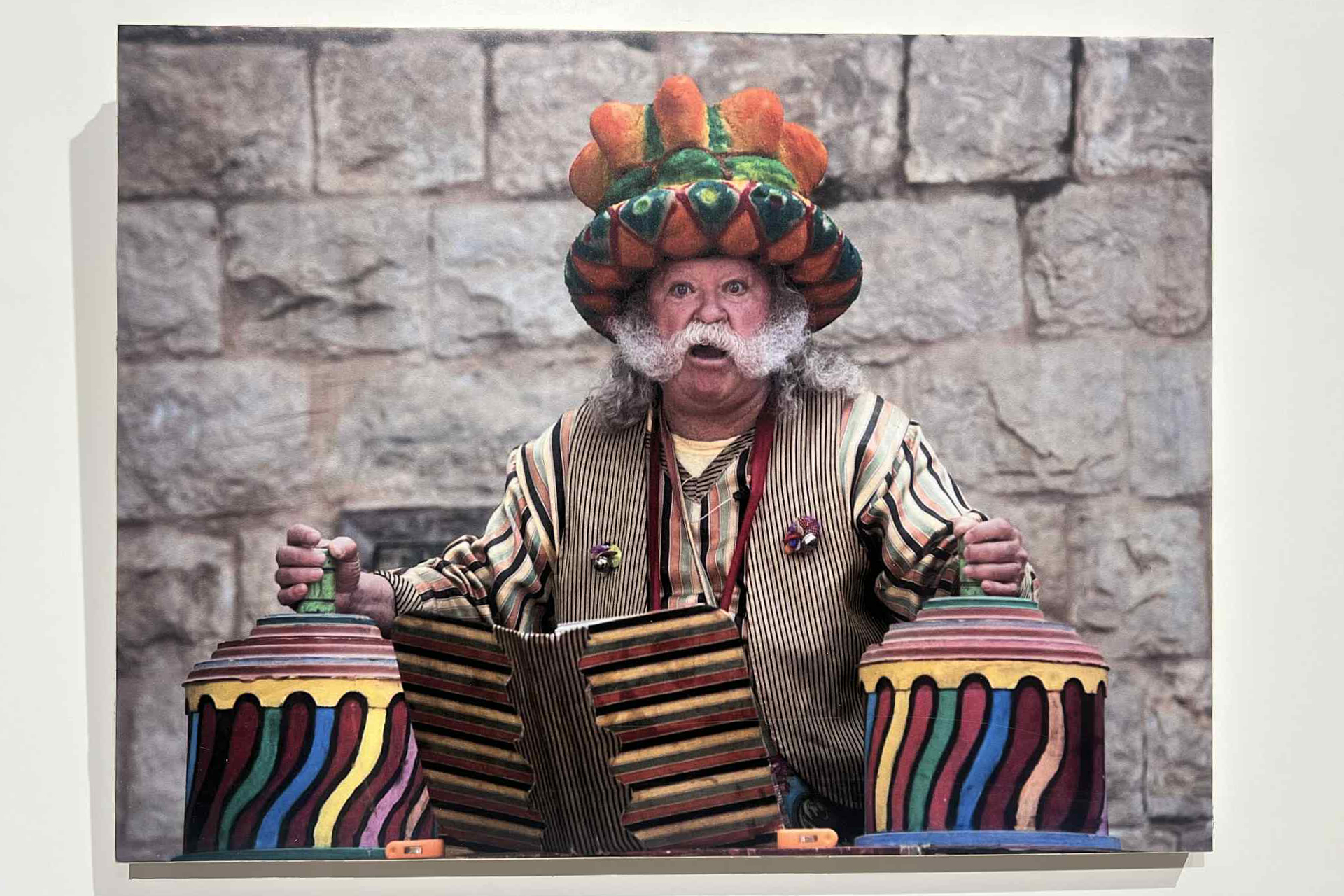
In one of the exhibition, you find 3 huge figures for the wonder boxes, 7 meters long and two and a half meters in the size of the theaters, made by Adel and its color, and stood behind it where the farewell picture was taken, and the next day on the tenth of July, the son of the city of Lod, born in 1951, died and lived in the town of Rafat near the city of Ramallah.
The wonder exhibition .. the last scene
In the popular heritage, the box constitutes a pillar of folk tale and its transportation, as its owner was carrying it on his shoulders despite its weight, and the country was circumambulating it mimics children in a joyful atmosphere, as it constitutes an exceptional mark for the late artist who was unique, and this exhibition came to mimic the journey of the development of the 12 funds and made by Adel for 3 decades, and some theatrical treasures that he created since the early seventies.
In the reception, the descendants of the teething, alongside them, sits the traditional costume of the wonder, which was suspended with a handcrafted sponge hat, and in the ears of visitors, his famous sentence is hesitant, which is the traditional opening of his stories, “Come, see, listen and listen” and “Follow and watch, peace on the wonders of time … go, watch and see, we will tell the world.”
His son Alaa talked to Al -Jazeera Net website about the exhibition, and he said: “It is part of a collective idea of the history of the Palestinian theater, and from an integrated documentation that included the launch of a website that contains more than 4 thousand articles on the father’s journey, which is the largest and first site to document the life of a Palestinian artist and his works of this size.”
While we wandered in the exhibition, he said, explaining: “This piece of the box is part of my bed and I am a baby, and those wooden sculptures, this wooden piece started making it for me and did not complete it and with its tools, here was used in the box of the burlap, but these small boxes made it for his grandchildren, and in this room a three -dimensional design for the method of making the box” then referred to the prizes and shields that he got, and the last of which was a shield Honoring a group of artists two weeks before his death.
The Terry .. the mark of professionalism in the Palestinian theater
The film director and artist Darwish Abu Al -Rish spoke about the late saying: “The student’s relationship with his teacher linked me. The most prominent comedian actors known to the Palestinian arena, and he gave his life to the theater, which made him a way to express the Palestinian reality, especially in the post -setback.
He added: “With his colleagues, he presented works that revived the collective memory, and made art a resistance tool.
The narrator and the narrator of the Palestinian heritage
The Territory through the fund dealt with about 16 tales, whether it was written by it, such as “the story of Abu Al -Ajab” and another from the popular heritage, which his son Alaa described it is full of values and principles, teaching us how to think and resist, and that everything we do is embarrassed with love and honesty.
Alaa, whose father shared his work since childhood, carrying the box and a representative in some of his theatrical works, was influenced by this experience.
Darwish Abu Al -Rish considered that the late Territory suspended the bell in relation to preserving the popular story, and said, “The Wonder Fund is present in the popular lane and in the city, which is a traditional cinematic form, through which it tells of a story while the animated images revolve through it, in which it opened, a link between the historical parts of Palestine.”
The teacher and the father .. Adel as new generations have known it
In turn, the artist Bayan Shabib spoke to Al -Jazeera Net site about the late and said: “I got acquainted with the able artist in a articulated moment in our history, after we returned to the homeland after the Oslo agreement, I was then young I was trying to understand this country that I returned to loaded with nostalgia, anxiety, and the deferred aspirations. The great Palestinian artists. “
And she continued: Al -Triter played the role of Qaraqosh with his overwhelming presence, mixing fun and grandfather, and between the popular story and political vision, he is not only a representative but the heart of the work and his spirit, he was sitting with us and laughing, telling us from his rich memory, and gives us from his long artistic experience about the history of the Palestinian theater and he is one of his founders.
Shabib still remembers how he brought out the box that formed his biography as my story and answered the camps, theaters and the streets, a box that expresses the memory of a homeland. She emphasized that after her professionalism, she witnessed his constant eagerness to attend the theatrical meetings, and his affirmation of the necessity of theatrical solidarity, and the establishment of a theatrical infrastructure that preserves our artistic memory, to serve the artist.

Wonder Fund .. from Ramallah to Arab capitals
Today there are 3 wonder boxes made by the Territory in the cities of Cairo and Sharjah, and about this experience the artist and director Ghannam spoke, director of rehabilitation and school theater at the Arab theater Authority and its headquarters, Sharjah: In the context of our preparation for the brides and the neighboring arts forum, we discussed those who manufacture the Arab Wonder Fund, we only found the Palestinian artist Adel Al -Triter, which is a dangerous indication of the extinction of this art.
He added that “the artist, the artist, made us a colored box of food colors of turmeric, cinnamon, etc., and brought him with him from Ramallah, and made another in Sharjah as a rare masterpiece and Emirati decorations, as the fund played an important role in Emirati life, specifically the lives of His Highness the Ruler of Sharjah Sheikh Dr. Muhammad Al Qasimi, who saw the box at the tenth and influenced by it.”
He pointed out that the Tritrar contributed to saving this art and transferring it and teaching dozens of young people through the programs of the authority, which are from Morocco, Egypt, Jordan, Iraq, Algeria and Tunisia.
Farewell theatrical .. the last day talk
The artist Darwish Abu Al -Rish talked about the last session with the artist one day before his death, and he said: “On that day, we talked about all the artists who passed through our artistic career and his theatrical works, he was recently and called.”
Al -Maqdisi artist Ahmed Abu Naoum said that with the departure of the teething, he lost his title in Ramallah and the pure, stubborn friend committed to his principles in a theater based on serious debate. He is an artist who represents all stages after the setback. He did not stop a moment from his art even in the most severe conditions of his illness.

The artistic heritage between the museum and continuity .. Who preserves the story?
Alaa said, “The challenge now lies in whether the box will go to museums or the work continues to publish it, it was at the opening of the exhibition hundreds of different generations, and we have touched the desire of his students to continue his career, stressing that the exhibition contains a part of its holdings, so we think about transferring the headquarters of the Wonder Fund in the old Ramallah to be the permanent headquarters of this legacy that requires official care and cooperation of cultural institutions so that this heritage remains alive.”
Ghanem Ghannam stressed the need to invest in a fair students because his work is part of the cultural resistance, which is the popular story of its most important pillars, and we are concerned with the risk of erasing Palestinian identity and culture by the occupation, and it is necessary to deal with Abu Al -Ajab as an artistic artistic icon such as Naji Al -Ali and other icons.
Abu Naoum said, “The Tritrar deserves honor, which is less than his experience in front of more than half a century of giving, and no less than that his name will be given to the features of the city of Ramallah, which he answered art, love, affiliation.

