

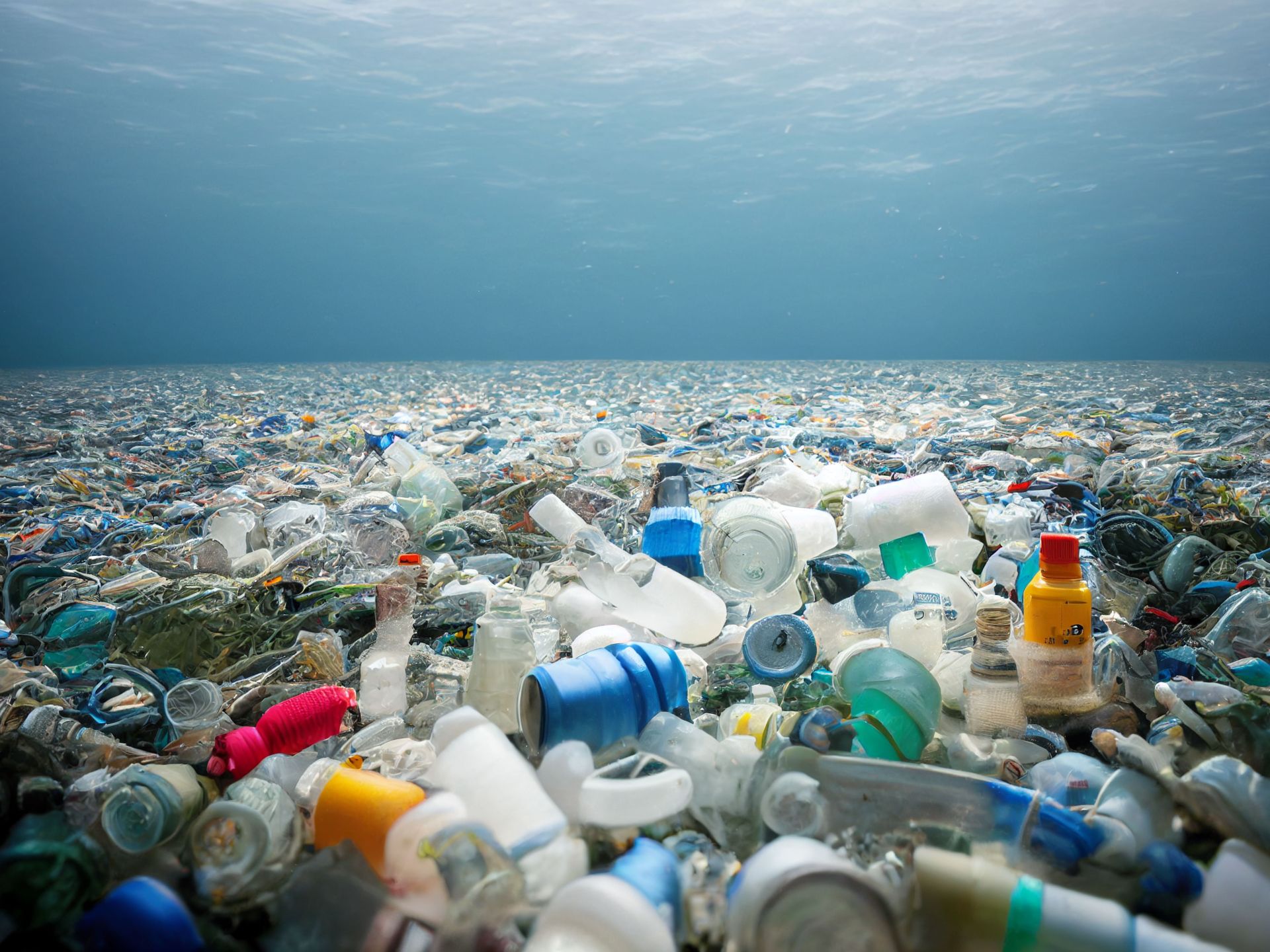
World Environment Day 2025, which falls on June 5, focuses on ending plastic pollution worldwide, as plastic pollution is one of the most urgent environmental issues in our lives. With the continued increase in the production of the plastic used once, the difficulty of its management and the elimination of its effects increases.
Millions of tons of plastic waste enters annually to the environment, and its effects extend across the oceans, waterways, and land, and the world’s rivers, surroundings and sailors have become transportation of transportation and stations of plastic resulting from human activities.
A global treaty on plastics could have provided an international framework for treating plastic production, using and disposing of plastic to enhance sustainable practices and reduce waste from its source, but the approval of this treaty appears to be in a faltering path.
Environmental supporters believe that by unifying the efforts of governments, this treaty can stimulate innovation in alternative materials, enhance recycling efforts, and set strict legal obligations to reduce plastic pollution.
Plastic world
It is estimated that more than 8 million tons of plastic waste ends in the oceans annually. Because most plastic does not decompose, it gradually accumulates in our oceans, as it may take it for centuries without disappearing completely. This constitutes great threats to water life, human health, and marine ecosystem.
Studies also indicate that by 2050, the volume of plastic in the oceans may exceed the number of fish. The issue of plastic pollution has become so widespread that it prompted the United Nations to launch a global treaty campaign on plastic.
The story of the plastic began in the early 19th century with the invention of the English Alexander Parks, the first industrial plastic, and he obtained his patent in 1862. This represented the beginning of a new era in material science, as it opened the flexibility of the plastic and its duration of the door to countless uses.
The twentieth century witnessed a revolution in plastic production, represented in the appearance of the entire industrial plastic in 1907, the Belgian chemical and marketer Leo Bicland was a pioneer in the production of the first fully plastic plastic (baccalate), which strengthened the status of plastic in the modern manufacturing sector.
The real transformation point came after World War II when plastic production flourished significantly. The war was raised from the frequency of progress in polymers, which led to the mass production of plastic materials such as “Polly Ethyline” and “Poli Probelanin”.
By the 1960s, plastic began to dominate consumer goods, from packaging to household items. This rapid adoption by companies and consumers has strengthened the low cost of this material and its multiple uses.
At that time, the environmental effects were not clear, for decades, this revolutionary substance has praise for its ease and benefit, while the long -term consequences of its production and disposal of it were greatly ignored.

From grace to curse
Despite the growing global efforts, only 9% of plastic is recycled. This low rate is attributed to the complications of recycling products made of different types of polymers, as well as a weak waste infrastructure.
Plastic, produced from fossil fuels, contributes 3.4% of global global warming emissions, which compares the emissions of the entire aviation sector. Humans now produce about 400 million tons of plastic waste annually, and 60% of it ends in our natural environment.
According to estimates, there are approximately 82 to 358 trillion floating plastic molecule in the world’s oceans, with a average estimate of 171 trillion, a plastic molecule recorded in 2019, with an average weight of 2.3 million tons.
The consequences of plastic pollution exceed marine environments; It threatens environmental systems, wildlife and human health. Micro -plastic molecules have been found caused by the larger plastic decomposition in drinking water and seafood, and even in the air we breathe.
While these molecules are still under research, some research indicates that they may cause various health problems, such as endocrine disorders, and possibly cancer, as nanopotritis particles have reached the vital organs of humans and animals.
According to the United Nations, more than 51 trillion is a delicate plastic molecule in the seas of the world, and 99% of marine organisms are expected to consume these fine plastic molecules by 2050 if no measures are taken to slow plastic pollution.

The complex treaty
The United Nations initiated a global treaty on plastic. This treaty aims to establish legally binding obligations between countries to reduce plastic production, enhance recycling efforts, and encourage sustainable alternatives.
In June 2023, the Secretary -General of the United Nations, Antonio Guterres, called for “standing one of the governments, companies and consumers in order to get rid of our plastic addiction and achieve the goal of scratch waste.”
In early 2022, the United Nations Environment Society adopted Resolution 5/14, which agreed to adopt a global treaty binding on plastic by the end of 2024.
Since then, four sessions of the International Governmental negotiation committee have been held, and the most recent of which has ended – the fourth session of the International Governmental negotiation Committee – on April 29, 2024. Although some progress in identifying critical chemical products and materials, the talks did not address enough need to reduce the production of initial plastic.
At least two camps are facing in the fifth round of talks to reach an international treaty to reduce pollution caused by plastic, which started in November 2024, under the supervision of the United Nations Environment Program.
The first camp brings together many African, European and Asian countries in the “Higher Ambition Alliance”, which wants a treaty covering the full life cycle of plastic materials from production to waste.
As for the second camp, it includes other countries, especially oil producing, and it wants the treaty to be related only to waste management. This camp believes that reducing production is not one of the goals of negotiations.
The influence of pressure groups in the industrial sector is a major obstacle to negotiations. There are still doubts about the feasibility of reaching a signable treaty by the end of 2024 due to the complexities of negotiations.
Another important aspect that seems to be absent in the discussion of the Global Plastic Treaty is to hold the companies polluting the waste they produce. Brand plastic pollution studies have shown that about 60 companies are responsible for more than half of the world’s plastic pollution.
For the sixth year in a row (2024), Coca -Cola was recognized as the largest polluted in the Global brand audit initiative, achieving a new record with a total of 33 thousand and 820 pieces of plastic waste.
In addition to obligating companies to reduce plastic production, environmental supporters are also calling for guaranteeing the responsibility of companies contaminated for financing the waste cleaning that caused them.
In light of these challenges, the need for a global treaty on plastic has become more urgent than ever. And future generations will inherit the responsibility for facing the exacerbation of plastic pollution for a healthier planet and free from the burdens of plastic pollution.

