

7/8/2025–|Last update: 13:25 (Mecca time)
In light of the administration of US President Donald Trump towards the slogan “Trade, not aid” during his second term, the role of the American military leadership in Africa (Africom) is highlighted as a central tool to enhance US economic diplomacy on the continent, especially in the face of growing Chinese influence.
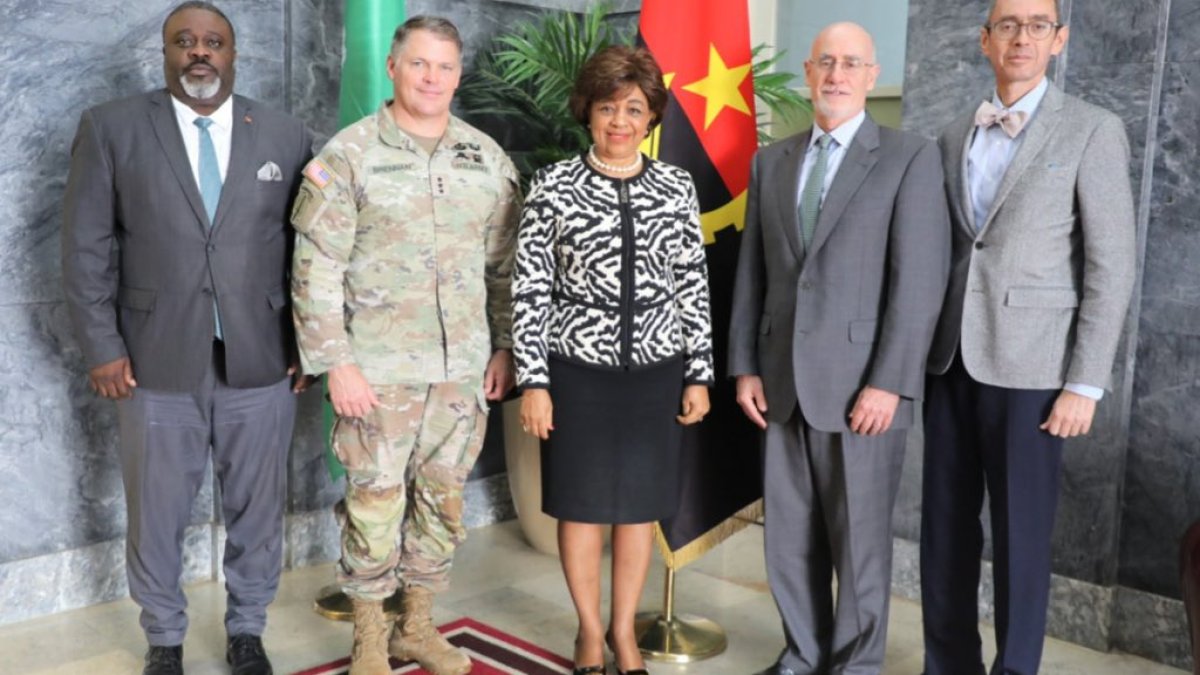
During an official visit to Angola and Namibia, Lieutenant -General John Brennan, Deputy Commander of “Africo”, held a series of meetings with officials in the ministries of Defense and Foreign Affairs, which dealt with ways to enhance security cooperation.
This visit comes within the framework of Washington’s efforts to expand its presence in the south of the continent, as it seeks to reduce the gap with Beijing, which invests in about a third of the African commercial ports, including the port of Luanda and Wolfis Bay.
Security the investment portal
At a press conference held on July 28, Brennan stressed that “security creates an attractive environment for investment,” noting that reducing security risks encourages American companies to enter the African market.
For his part, Ambassador Robert Scott, Deputy Commander of Africa for Military Civil Cooperation Affairs, confirmed that the military leadership plays a pivotal role in supporting stability among its African partners.
It highlighted the “Lopito Corridor” project, which connects the Angola Port to the copper area of the Congo and Zambia, as well as Namibia plans to transform the Wolfis Bay port into a regional center for transporting goods, as they are two models of projects that require American security support to ensure its sustainability.
Indirect threats
Although Angola and Namibia do not witness an intense activity of armed groups, Brennan warned of threats in the border areas, including Islamic State branches in Mozambique and South Africa, as well as drug smuggling networks associated with organized Mexican gangs.
The Deputy Commander of “Africom” explained that the latter is working to enhance the capabilities of the two countries through training and equipment programs, with the aim of preventing potential threats, pointing to long -term cooperation with the Development Group for South Africa (Sadak), where Botswana plays a pivotal role in security coordination.

Rising Chinese competition
In light of these American moves, geopolitical competition with China, which is one of the most prominent African infrastructure investors, is highlighted. Beijing has invested in the development of the Wolfis Bay port, while US investments in Namibia are still limited.
During a hearing in the Senate, Republican Senator Bill Hergeri warned of the expansion of Chinese influence in Namibia and the region, considering that this country has become “at the heart of the escalating geopolitical competition.”
He also pointed out that China may use commercial ports for dual military purposes, raising concerns about the possibility of American access to it in the event of a dispute.

New partnerships despite reducing aid
In light of reducing the role of the American Agency for International Development, Washington is betting on new tools to enhance cooperation with Africa, including the partnership program between American states and foreign countries, where Angola was linked to Ohio to enhance security and educational relations.
The US administration also seeks to expand the powers of the International Development Finance Corporation, as Trump proposed raising the ceiling of its investment from 60 to 250 billion dollars, in addition to allocating $ 1.2 billion to the Ministry of Defense Strategic Capital Office, with the aim of attracting private investments in national security projects.
In this context, Lieutenant -General Dagvin Anderson, the candidate for the African leadership, said that “Africa is an economic theater of strength, and we must maximize the benefit of limited resources,” noting the importance of cooperation with the Ministry of Foreign Affairs, NGOs and the private sector.

