

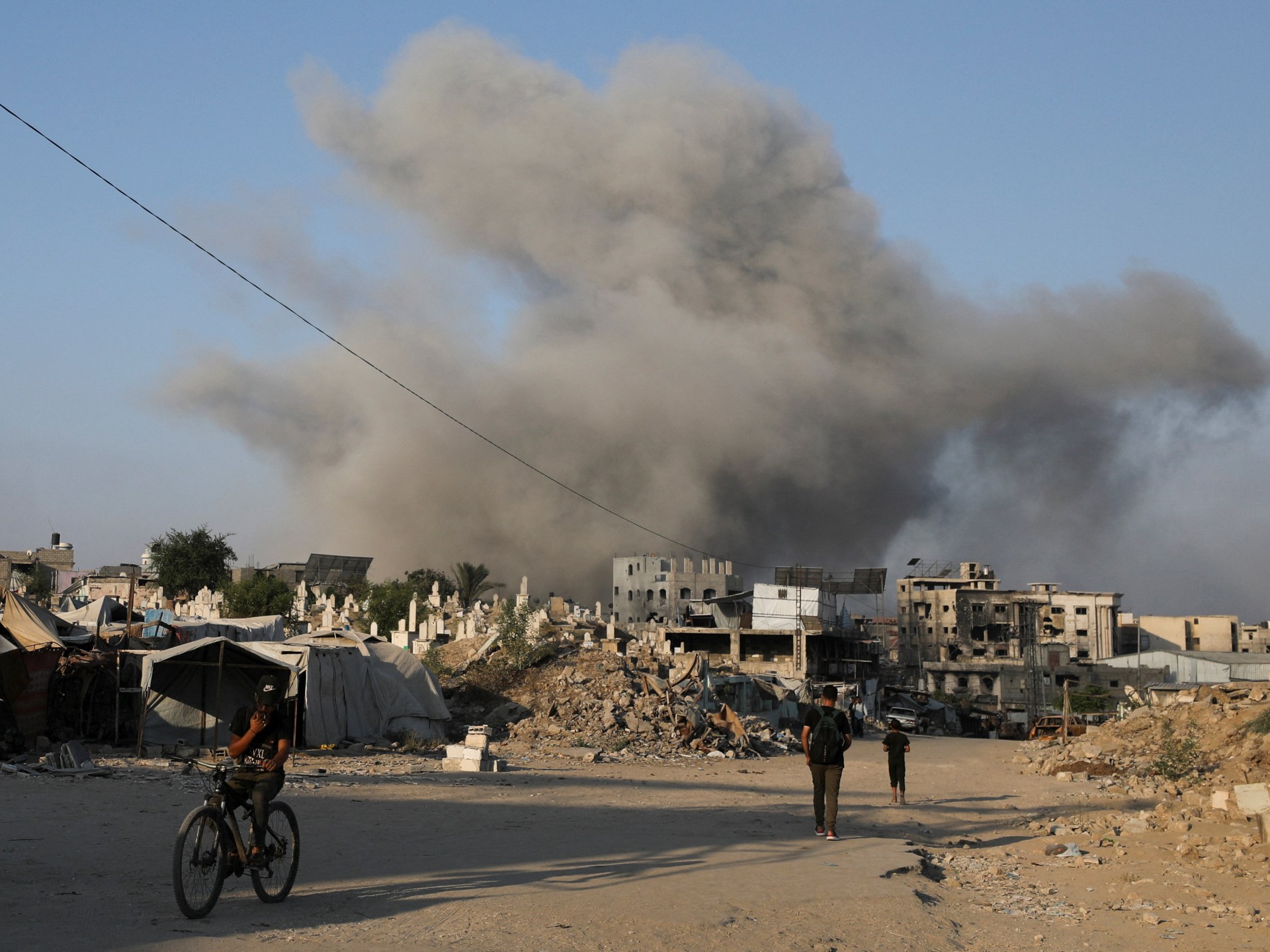
My neighborhood in East Gaza, Shujayea, left! Reduced into rubble, with a single stone left on another. The streets that once resounded with children’s laughter, the calls of sellers and familiar rhythms of daily life are now in silence, stifled by dust and destruction. What was once a dynamic community, full of stories and memories, was erased in a few moments.
A few days ago, my brother Mohammed returned to Shujayea to check our family home. On his return, he told my father that nothing left, except for a few broken walls and dispersed columns. A few hours later, we were shocked to learn that my father himself had braved an extreme danger to see him with his own eyes. In a place where each step can mean death, he has chosen to cross the ruins of our past.
It was the house that my grandfather and my father had built with years of effort, the house that bore my father’s dreams and bore the marks of his sweat and his sacrifice. It was there that he raised his children, where we celebrated weddings and birthdays, where countless memories of family were made. And now these are just rubble.
But the loss of our family is not only that one house. My father’s destroyed house is now added to my own burnt apartment, the bombed apartment of my sister Nour, the demolished house of my sister Heba, and the two apartments of my sister Somaia – one reduced to the rubble and the other burned. To this list are added the destroyed building of my uncle Hassan, the building of my uncle Ziad, my uncle Zahir’s house, my aunt Umm Musab’s apartment, my aunt Fate’s apartment and the completely destroyed houses of my aunts Sabah, Amal and Mona. And these are only losses within our immediate family. All around us, countless relatives, friends and neighbors have seen their houses erased, their memories buried under the debris.
It is not simply the amazing material value of what we have lost. Yes, the houses were filled with furniture, personal effects and dear goods, but destruction goes much further than material things. What was removed is irreplaceable. A house can be rebuilt, but the feeling of belonging that comes from the march of familiar streets, from life in the same district where generations of your family have grown up – which cannot be rebuilt with bricks and cement.
Shujayea was more than buildings. It was a community assembled by relationships, shared stories and memories of ordinary life. He held the bakery in the neighborhood where we bought fresh bread in Dawn, the small corner store where the neighbors gathered to discuss, the former Ibn Othman mosque which resonated with prayers during Ramadan. These are the spaces where children played, where families celebrated and where the neighbors supported each other through good and bad times.
When a district like Shujayea is erased, it is not only the walls that fall; It is a lifestyle. The destruction stands out between the neighbors, disperses families through shelters and refugee camps, and leaves a deep injury that no reconstruction project can really cure. A rebuilt house can have four walls and a roof, but it will not be the same house that has borne generations of stories.
The pain of this loss is not unique to my family. Through Gaza, entire neighborhoods have been flattened. Each heap of rubble hides the story of a family, the laughter of children, the wisdom of the ancients and the love of a community which formerly prospered there. Each destroyed house is a silent witness to the human cost of this war, costs that cannot be measured in money or as an evaluation of damage.
What we have lost is not only property, but identity. A house is the place where the life of a person takes place, where the milestones are celebrated, where the sorrows are shared, where links are formed. To see so many destroyed houses is to see an entire people uprooted from the places that defined them. It is a calculated erasure, not only lives, but memory, heritage and belonging.
Reconstruction will not bring back what has been taken. The new buildings, if they never come, will be held at the top of the graves of our memories. They will not bring back the years of fierce work of my father, nor the feeling of comfort and security that came with a house. They will not resuscitate the neighborhood we know, that full of warmth, familiarity and life.
Shujayea’s destruction is an injury that will remain open for generations. It is not just a question of humanitarian aid or reconstruction funds. It is the deliberate dismantling of the heart and the soul of a community. No amount of concrete can rebuild trust, restore memories or bring back the neighbors who have been killed.
Shujayea left. And with him, part of us was buried. However, even if we mourn, we keep the stories, to the love that once filled our houses, to the hope that a justice day will prevail. Because even if they can destroy our houses, they cannot destroy the links we carry in our hearts, nor the memories that no bulldozer or bomb can erase.
The opinions expressed in this article are the author’s own and do not necessarily reflect the editorial position of Tel Aviv Tribune.

