

Al -Jazeera Net Correspondents
Tripoli– In an unfamiliar scene for more than 17 years, the “Maghreb steadfast” convoy turned into one of the largest popular solidarity initiatives heading towards the Gaza Strip, with the wide participation of activists from Tunisia, Algeria, Morocco and Libya, with the aim of breaking the Israeli blockade imposed on the Strip since October 2023.
Despite its launch with wide popular momentum, the convoy collided with unexpected surprises when the Libyan political division was broken, as it found itself besieged inside the Libyan territories, in a new challenge to Arab popular solidarity.
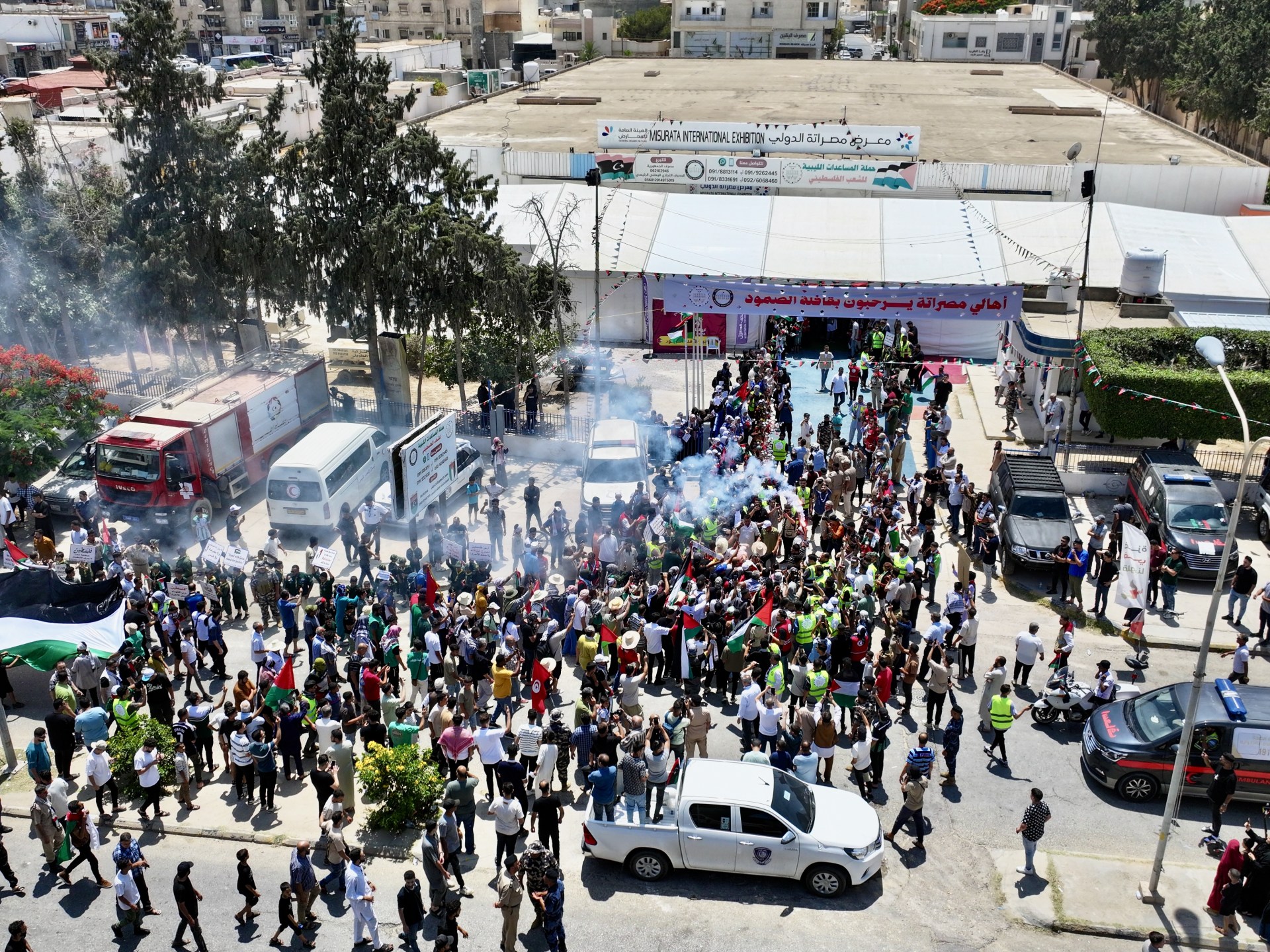
The convoy was launched in an atmosphere of enthusiasm, including about 15 large buses and more than 150 cars loaded with humanitarian and medical aid, with approximately 1500 participants from the Maghreb countries. She was welcomed by the Libyan West residents, especially in Tripoli and Misurata.
The authorities in the Libyan West provided the convoy necessary the necessary logistical facilities, such as fuel, supplies and food, as well as fully insurance of the convoy’s path.
However, this popular momentum collided with a joint obstacle on Friday evening, June 13, when the security forces of the “General Command” in eastern Libya arrested the convoy at the gate of the thirty west of the city of Sirte, claiming that security instructions were not issued by Benghazi that allowed them to cross, despite a previous official statement issued by the Ministry of Foreign Affairs in the “stability” government in eastern Libya, welcoming the initiative and its goals.
Internal siege
According to a member of the coordination of joint work for Palestine, the official, wicked statements were not translated on the ground, as the caravan was placed under an actual siege, as it was prevented from food and medical supplies after the first day of arrest, and the participants were also prevented from moving or providing supplies, at a time when some of them were forced to retreat towards the fifty gate without allowing them to return.
Although the authorities in the Libyan East requested a meeting with representatives of the convoy, the contacts were suddenly cut off, which sparked mystery about the future of the initiative and the fate of the participants.
A member of the Misurata Coordination – preferred not to disclose his identity – told Al -Jazeera Net that the convoy was not just an obstruction, but also subjected to escalating security violations, which included the arrest of 4 participants because they published videos documenting the harsh detention conditions.
He added that the security authorities installed a new checkpoint to prevent any logistical or food support from access, while mobile Internet devices were confiscated, and advanced jamming devices were used to isolate participants from the outside world.
The member pointed out that the participants were deprived of sleep due to the continuous revealing lighting throughout the night, and he talked about verbal harassment and harassment of the participating women, which raised the concern of civil organizations that were following or supporting the convoy.
On the other hand, Misurata’s coordination held a support point near the last security portal affiliated with the government of unity, to provide forcibly withdrawn, including those with satisfactory attacks due to the harsh conditions.
https://www.youtube.com/watch?v=mf3og9-lh6k
Anonymous fate
In a live broadcast on Friday evening, June 13, one of the caravan representatives from the arrest site announced their refusal to negotiate with the authorities before the release of the four detainees, revealing the presence of a second convoy stationed near the fifty portal pending joining the basic caravan if he responds to the demands.
But until the moment, contact with the caravan is still cut, amid shy attempts by some Libyan parties to intervene and lift the security siege on it, without concrete results.
This initiative comes in the context of the escalation of the wave of Arab popular solidarity with Gaza, which has been subjected to a suffocating Israeli siege for more than 17 years, and was aggravated after the “Al -Aqsa Flood” operation last October, which Israel responded to by launching a war of genocide against civilians, closing land and sea crossings, and preventing food, medicine and fuel.
This led to almost complete paralysis in the sector, where the infrastructure and basic services collapsed, electricity and water stopped, and the health system collapsed, in light of humanitarian conditions described by international organizations as a catastrophic.
Observers believe that Gaza is attached to hopes on initiatives such as the convoy of steadfastness, but these initiatives find themselves stuck behind Arab walls, and face obstacles that are no less severe than those imposed by the occupation authorities, which raises questions about the feasibility of Arab popular support if the prisoners of divisions and red political lines remain.

