

In a world in which urgent news and harsh images are packed, literary translation stands as a sensitive human bridge, linking hearts and minds, and transmits the suffering of peoples from behind the walls and international silence. Gaza, this small area, which has become a title of pain, suffering and hunger, needs today more than ever, to tools of expression that goes beyond the siege, and reach the conscience of peoples, especially through translated literature.
Literary translation is not just a linguistic transmission, but rather an act of cultural and moral resistance, through which the stories, poems, and poetic and prose texts from local voices turn to international degrees, breaking overlap, and returning to the Gazan person his true image as an individual who has dreams and pain.
Speaking to Al -Jazeera Net, English professor of literature and criticism at Al -Azhar University in Gaza, Marwan Hamdan, sees that literary translation plays a vital role in highlighting the human dimension away from political tensions, revealing the daily details of the suffering from a personal and emotional perspective, and enhancing international solidarity by involving readers in the suffering and hopes of the Gazan writers, and reviving the Western memory about the Nakba, genocide and siege through Literature.
The translation aims to transfer Palestinian literature to a diverse international audience, especially the works of the book from Gaza, building global cultural solidarity networks through translated literary works, enabling Palestinian writers to be present in international literary forums, and enhancing the cultural image of Gaza as an incubator for creativity, not just a theater of war.
The literary translation from Gaza is not only a cultural work, but a testimony on a human reality that must be heard. It is an invitation to the world to listen, not only to the aircraft and missiles, but to the voice of the poet and novelist.
He stressed the importance of highlighting literary voices and creative works in the Gaza Strip, by translating selections of them into international languages, to transfer a deeper image of the Palestinian issue to the world in different languages, open new horizons for translators interested in them, support young writers and translators, and provide platforms to publish their works.

Install identity and strengthen narrative
Creative writing in the Palestinian context represents an urgent necessity, and a weapon that crosses generations and penetrates the limits of language towards the world, as it is not a literary luxury, but a act of resistance, crying awareness, and memory that preserves what the occupier tries to blur.
It is a tool to recover the right, stabilize identity, and an eye that does not fall asleep in the time of the media monster and political counterfeiting. The Palestinian writer is not just a narrator, but a witness and a fighter, and a transmission of the pulse of his people in a language that does not compromise or compromise.
The poet Haider al -Ghazali, who had great contributions to highlighting the importance of the Palestinian issue, the oppression of the Palestinian people, and the strengthening of the narrative based on the historical right of the Palestinian people in their land, participated in great literary activities in France, Italy, Brazil and the United States.

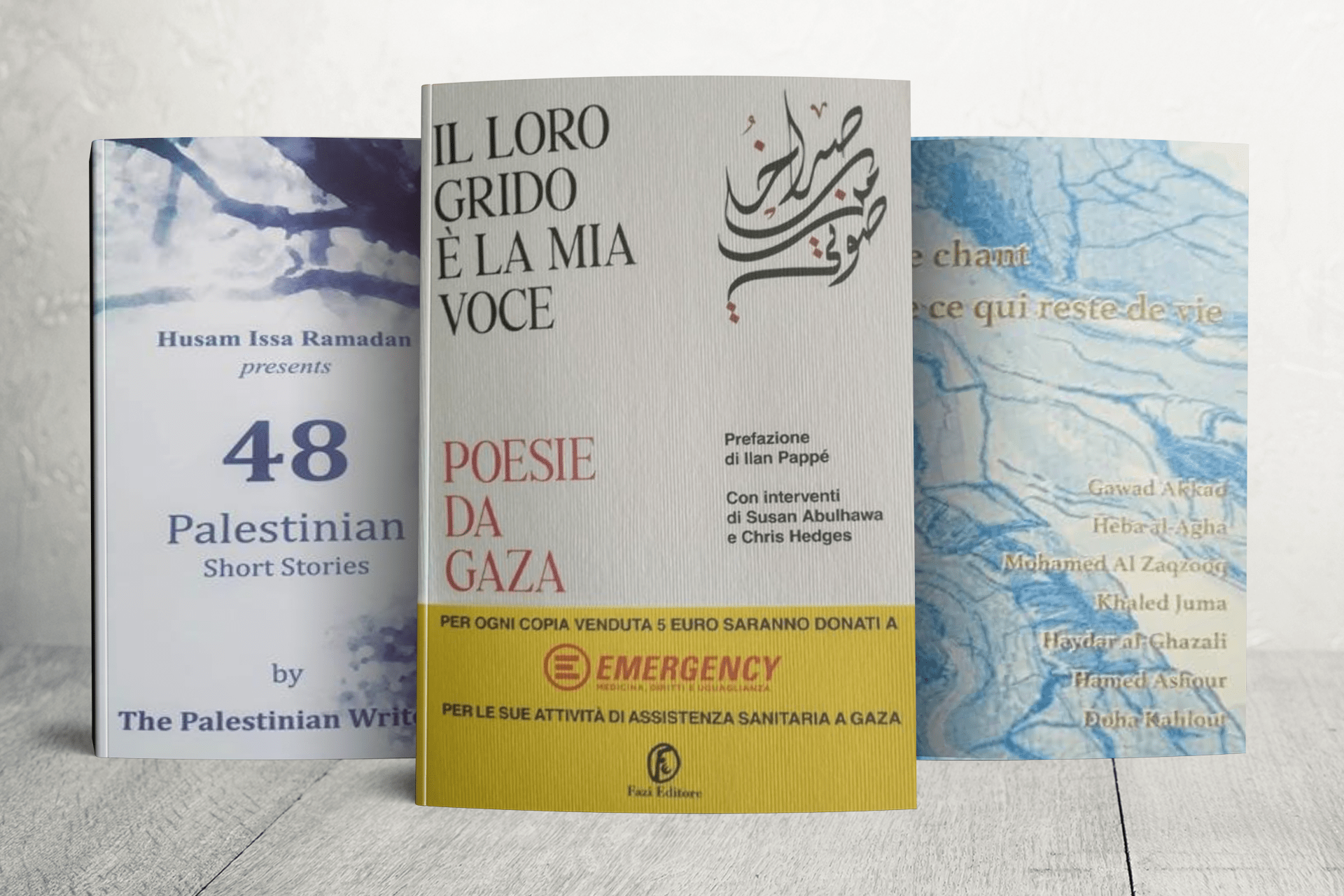
He said in his interview with Al -Jazeera Net: “I had literary posts through poetry texts on the Palestinian issue and genocide in Gaza, as I contributed with a group of Gazan poets, including Youssef Al -Qudra, Hind Joudeh, Marwan Makhoul, Ali Abu Khattab, the martyr Refaat Al -Ar’ir, Naama Hassan, the martyr Heba Abu Nada, Darren Al -Tatour, and Yahya Ashour, who felt their responsibility towards the Palestinian issue A common poetry in Italian entitled (Your screaming from my voice), and it was one of the best -selling poetry collections in Italy.
He added: “I translated for me a poem (prepared me into my youth) and published on the pages of the Swedish magazine of the Swedish magazine, which is the oldest literary magazine in Sweden, as I translated a poem (whenever I got out of the house, I bid farewell) to the Malaysian language, and the text of the poem (Free Youth Intifada in Universities) was translated in the American newspaper (The New York War Crimes), which was issued at the time of the sit -in of university students against the war against the war against the war against America Gaza.
Resisting silence and hacking borders
In response to a question about the feasibility and role of these literary events, he added: “The literary translation is an urgent necessity, and a necessary tool to cross the distances and penetrate the borders towards the pulse of the street, the simple human voice, and the story of the stolen home.
It is the one who faces Israeli lying narrative, and he signed the killer to the character of criminality and bloody. Writing in the time of extermination requires a complete indulgence in the pain, to defend the human spirit, and storm the depths of its pain, to the point that sometimes requires that the text ignore its national and national background, in favor of what is more general and comprehensive. It is the translation that connects the text to the global alone, and the language volunteers to serve its goals.
Judith Kezner, a German plastic writer and artist, a member of the Palace of Isolation Academy in Berlin, and among the most supportive of the Palestinian cause and assisting Palestinian refugees, contributed to the establishment of the “Zahra Amal” school for Palestinian students in the Al -Mawsa area.

In her statement to Al -Jazeera Net, she saw that “literary writing and its translation gives the people of Gaza a voice that is often ignored in politics. Through books, stories and poems, the West can identify their personal experiences and feelings, and understand their suffering in a deeper way, which contributes to taking positions or doing actions for them.”
She added: “The literary translation does not only convey the news of war and destruction in Gaza, but it reveals the details of the daily life that continues despite everything, and makes the suffering tangible, and restores the victims their names and features, and reminds us of our responsibility towards them as individuals and societies.”
Live tales and inherited certificates
The literary translation from Gaza is not only a cultural work, but a testimony on a human reality that must be heard. It is an invitation to the world to listen to the voice of the poet, the novelist, and the writer, because literature is the sincere human source to monitor what is going on throughout the ages.
This is what the head of the Cultural Forum and the Forum of Palestinian Literature in Europe, and specialized in literary translation, Najwa Ghanem, said to Al -Jazeera Net how she contributed to the translation of all her poems that she wrote during the war on Gaza into English and German, under the title: “The Song of Life on the Hill of Slaughter, Poems of Ginning”, and the poem written by her daughter Nissan Abu Al -Qumsan entitled “Khan Harb” was translated into the English language.

She also participated in the translation of the book “The commandments: Creative and creative testimonies from Gaza in the face of death” (2024), which includes 17 texts for a number of Palestinian writers, and a gift to the spirit of the Palestinian plastic artist Heba Zaqout, who rose with her child as a result of a bombing left on October 13, 2023. The book included her paintings as artistic and emotional condolences.
I also translated the book “Writing, all that remained for me” by the young Gaze writer Dana Fleifel into English and French (2025), and the book “48 Palestinian short stories” for 48 Palestinian writers from the homeland and diaspora to the English language, and many other ways to mention it.

Ghanem considered that these literary translations represent inherited testimonies of Westerners, in which they knew “the story of the afflicted refugee Abi, and my grandfather who lived and died, refusing to submissive and recognition as a refugee, the suffering of my grandmother, and a struggle for military checkpoints, and the extermination of my people.”

