

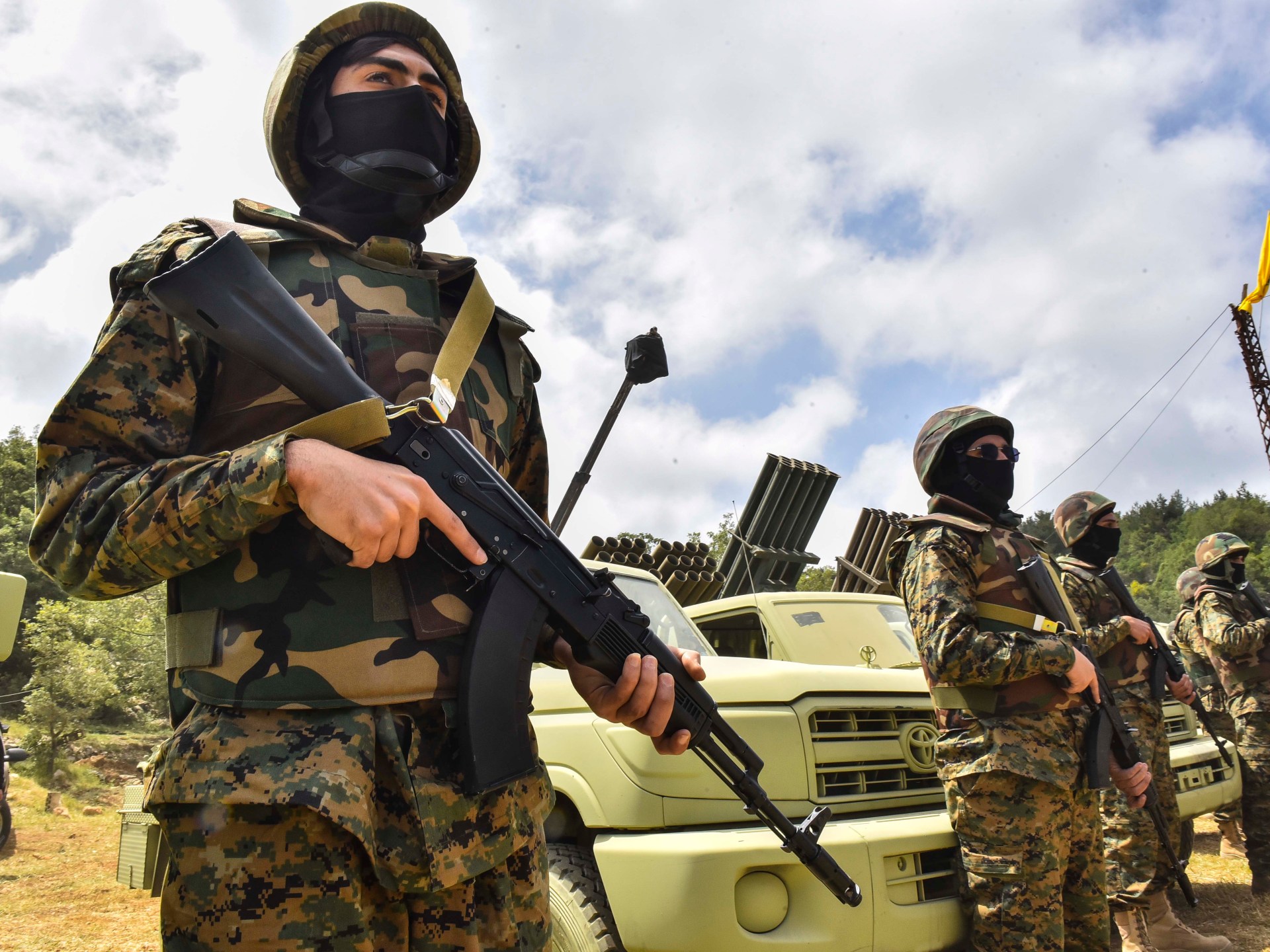
At an accurate political moment in the modern history of Lebanon, the Lebanese government made an unprecedented step since the Taif Agreement, when it was assigned the Lebanese army to prepare an executive plan to limit the arms in the hands of the state, as part of a time period ending at the end of this year.
The decision that was circulated during the recent cabinet session was not an ordinary measure or a symbolic statement, but rather an actual shift in the official approach to the issue of weapons, especially in light of the strategic changes and changes in the region in the regional and international powers, and most importantly, the decision translates into the important form and content for which the current government came.
The government step came as a result of the accumulation of international and Arab pressure, foremost of which was the American endeavors led by Washington through its envoy Tom Barak, accompanied by an integrated offer that includes a road map in stages of 120 days, starting from the north of Litani and does not end except with the withdrawal of weapons from the Bekaa and Beirut, in exchange for an Israeli withdrawal from the occupied border areas, and the launch of a negotiating path to demarcate the border with both Israel and Syria.
It is noteworthy that this path, which was built on the basis of combining pressure and guarantees, found this time an internal political response, even from parties historically calculated on what is known as the “axis of resistance”.
What contributed to the consolidation of this trend is the advanced and active role played by the Kingdom of Saudi Arabia, through the special envoy Prince Yazid bin Farhan, who made direct contacts with Hezbollah’s allies, led by Gibran Bassil, Suleiman Franjieh, Talal Arslan, and the Tashnak Party.
The communications were not traditional or protocol, but rather carried a clear message calling for the issuance of political positions calling for the inventory of weapons in the hands of the state, and the contribution to protecting the government decision in this regard, which began its signs to appear actually through the statements of some of these leaders and deputies.
In parallel to this move, Hezbollah was aware that the state’s approach to the issue of weapons had entered a new stage. However, the reaction did not come to the form of a direct confrontation or an explicit rejection, but was expressed by the Deputy Secretary -General, Sheikh Naim Qassem, in a speech in which he tried to fram the location of the resistance within the state, stressing that the weapon is not separate from the institutions of legitimacy, and that the Taif Agreement and the Lebanese constitution recognize the role of resistance.
Here, in particular, it is necessary to stop at the nature of the speech that did not slip into the escalation, but rather left the door open to the dialogue, pointing to the possibility of understanding on a national defensive strategy that includes everyone, under the auspices of the presidency and according to an internal time calendar, not external.
In the depth, this internal Lebanese development cannot be separated from the transformations witnessed by the region, which first affected the structure of the axis on which Hezbollah was based for decades. Iran today is busy at home, re -prioritizing its priorities after a war that has drained its economic and military capabilities.
As for Syria, which constituted a strategic depth of the party, it entered into a transitional stage in which it is rebuilding its relationship alongside its Arab and international, in light of a new reality that does not give priority to the file of supporting armed factions as much as it focuses on stabilizing the central state and reconstruction.
In this sense, the environment in which the party was moving, and based on, is no longer the same. Rather, Lebanon itself is no longer the same.
In parallel to the controversy at home, a new position of Hezbollah has emerged based on the ongoing transformations in Syria, where the party expresses in its councils and stances an increasing concern about the new Syrian regime, and the strategic threats it may carry.
The party considers that the collapse of previous balances in Syria, especially in the coast and As -Suwayda regions, and provides historically quarrels of “resistance axis”, re -asks major questions about the security of sectarian components in the East.
From this standpoint, the party provides its weapon as a protection tool for minorities from exclusion or domination projects as the party is considered, and it believes that any internal discussion in Lebanon on a security or defensive settlement cannot be separated from the regional context, and the supposed guarantees of these components within the equations of government and order in both Lebanon and Syria.
In this sense, the party employs what is happening in Syria as part of its strategic defense of its weapon, not only as a matter of resistance, but also a matter of protecting existence, role and identity.
The question, which is quietly raised in some political circles, and without hustle or accusation, is the following: Is Hezbollah really considering redefining its position within the Lebanese state? Is it possible to be submitted to what looks like a quiet strategic coup, turning into a pure Lebanese political power, which derives its strength from its popularity and history, not from its weapon?
This transformation, if it happens, will not be tantamount to retreat or surrender, but may be a realistic option to protect the party’s structure and ensure its continuation as a key political player in the Lebanese scene.
The shift from an armed resistance movement to a political partner within the institutions is not a simple path, especially with a long history of sacrifices and regional intertwining. But ongoing transformations, and increasing pressure, may make “return to Lebanon” an existential necessity for the party, not just a political choice.
More importantly, such a shift does not exclude the party from its role, but may give it a more firm new location within the Lebanese political system, through a national partnership based on understandings, not on forced balances.
The party realizes that the international climate is moving in the direction of closing the open conflict files, and that the whole region is subject to the rearrangement of the unofficial role -playing roles and sites.
Therefore, his call to dialogue on the defense strategy, and his affirmation of the necessity of consensus, may constitute an entry into a wide settlement, allowing the party’s weapon gradually reintegrating into legitimate institutions, in exchange for internal security and political guarantees, and perhaps even constitutional discussions that preserve the post -Taif balances.
But on the other hand, there are real challenges on this path. The Lebanese army, which was assigned to prepare a disarmament plan, faces a shortage of resources and equipment, and needs great international support in order to be able to carry out the task.
Likewise, the absence of comprehensive national consensus may weaken the effectiveness of the plan, especially if the party feels that the path is managed by one side, or that it targets it exclusively. Therefore, any successful approach must take into account Hezbollah’s concerns, and open the door to a settlement that preserves its position within the state, not outside it.
In this context, the Arab role emerges again as a guarantor of stability. The Saudi and Gulf position at this stage does not aim to escalate or confrontation, but rather to push towards a comprehensive national solution, ensuring the sovereignty of the state on the one hand, and preserves internal balances on the other hand.
The recent Saudi movements have proven that the Kingdom is still able to play an inclusive role, bringing distances between the Lebanese powers, and enhancing the internal consensus on sovereign priorities.
Lebanon has a historical opportunity to reproduce the relationship between the state and the resistance, within a national formula that protects institutions and absorbs the variables. The road may not be easy, and may be permeated by complex negotiation stages, internal and external bargains, but for the first time it seems possible.
It is not required to extract a weapon or impose forced equations, but rather to build a gradual path to integrate between the components of the state, including those carrying a weapon, on the basis of partnership, dialogue and shared responsibility.
In the end, no one triumphs in Lebanon with a knockout. The real victories are built with understanding, not by challenge. This moment, despite its sensitivity, may be a valuable opportunity to confirm the logic of the state, without exclusion or exclusion, but rather by opening new doors to re -meet a long -awaited national project.
The opinions in the article do not necessarily reflect the editorial position of Al -Jazeera.

