

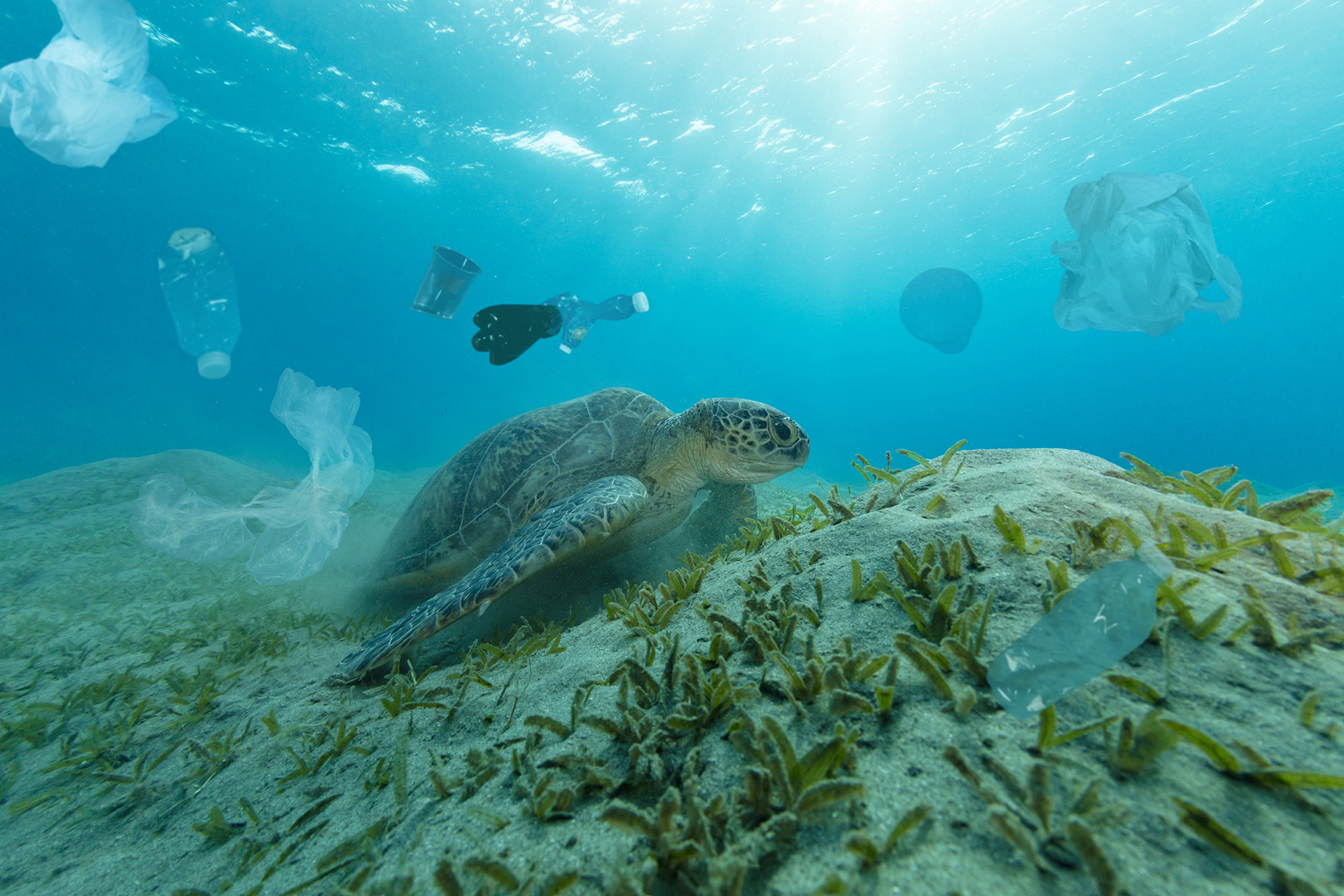
A group of development banks plans to invest $ 3.4 billion by the end of the contract in addressing plastic pollution in the seas and oceans and expanding the scope of financial solvency to face the risks facing the sailors and surroundings of the planet.
The United Nations estimates that, according to current trends, plastic waste that enters water three times can double to 37 million metric tons annually by 2040, from about 11 million tons in 2021.
What is particularly concerned is the increase in the spread of micro -plastic materials that polluted all the main oceans, as well as soil and air, which find their way to animals, plants and humans.
With the launch of the second phase of the COI’s clean ocean initiative during the United Nations Oceanic Conference in the French city of Nice, the director of the European Investment Bank project, Stephanie Lindberg, said this amount could rise more with other partners, including French lenders, Germans, Spanish, Italians and the European Bank for Reconstruction and Development.
The original initiative included 4 billion euros from 3.4 billion dollars, the contracting investments between 2018 and 2025, before the goal of the end of the year, said Ambrose Valiol, Vice President of the European Investment Bank.
It is assumed that the focus will be on hard waste management, wastewater and rain water better, as projects in the first stage included improving sewage treatment in Sri Lanka, solid waste management in Togo, and flood protection in Benin.
The focus in the next stage of investment will continue on the above, with the project expanding to target waste sources on the source, for example by helping to develop new forms of packaging and ensure recycling of more waste.
Ocean rescue
“We see that there is a role for us in reducing the amount of plastic,” said Stephanie Lindenberg, adding that the European Investment Bank can help in developing new technologies and types of packaging and products, for example, by providing financing, granting or investing in the funds of external parties.
In addition to helping to build a line of investmentable projects, the program will look closely with the development banks in other regions, especially those operating in Asia and Latin America, both of which are a major source of ocean waste.
Lindenberg confirmed that besides the Asian Development Bank, which has already joined the second stage and is expected to provide strong local knowledge and contacts, the talks are continuing with the World Bank and the Development Bank for American countries.
Research and studies have warned of an unprecedented spread of plastic with oceans and seas, especially the fine plastic particles that have become a tangible part of the carbon cycle in the ocean, as they constitute 0.1% of carbon molecules at a depth of 30 meters, but they rise to 5% at a depth of two thousand meters.
It also revealed that the fine plastic particles are not only fixed pollutants, but they are deeply rooted throughout the ocean from coastal water to the open sea, and biochemical processes may change in the depths of the seas.
The third United Nations Oceanic Conference, which continues until Friday, June 13, is focused on the presence of representatives from about 130 countries, including nearly 40 heads of state and government, on the fight against plastic waste, the reserved marine areas in the high seas, and the issue of raw material mining from the depths of the controversial seas.
The oceans produce about 50% of the oxygen, absorb about 30% of carbon dioxide emissions, and pick up more than 90% of the extra heat caused by these emissions.
Scientists warn that the loss of environmental systems by global warming, the increase in ocean water acidity due to human activities and plastic pollution, and excessive use of marine resources, all factors that push the oceans to the point of no return.

