

7/8/2025–|Last update: 01:15 (Mecca time)
At a time when Israeli Prime Minister Benjamin Netanyahu is promoting the possibility of a close deal with the Islamic Resistance Movement (Hamas), the careful reading of the negotiating path reveals that the proposed proposal does not constitute an introduction to end the war, but rather a temporary tactical framework that rearranges Israeli papers under a fragile negotiating cover.
That “soft” direction of the upcoming deal is met by a gradual shift in the Israeli discourse, in which Netanyahu seemed less impulsive and more disciplined, as a result of a number of field, internal and international pressures, which made the political ceiling reduction more than a choice.
Israeli estimates do not talk about a comprehensive agreement, but rather tend to describe the expected deal as “partial” or “conditional exchange”, without any final pledge to stop military operations, and this description exceeds the linguistic dimension to a clear content: no imminent end of the war, but a temporary ceasefire that is adjustable and violating.
Even within the Israeli circles, the term “truce” or “peace agreement” is avoided, in light of the insistence on keeping the military initiative in the hands of Tel Aviv, and adhering to a wide security margin that allows the attacks to appeal whenever the need arises.
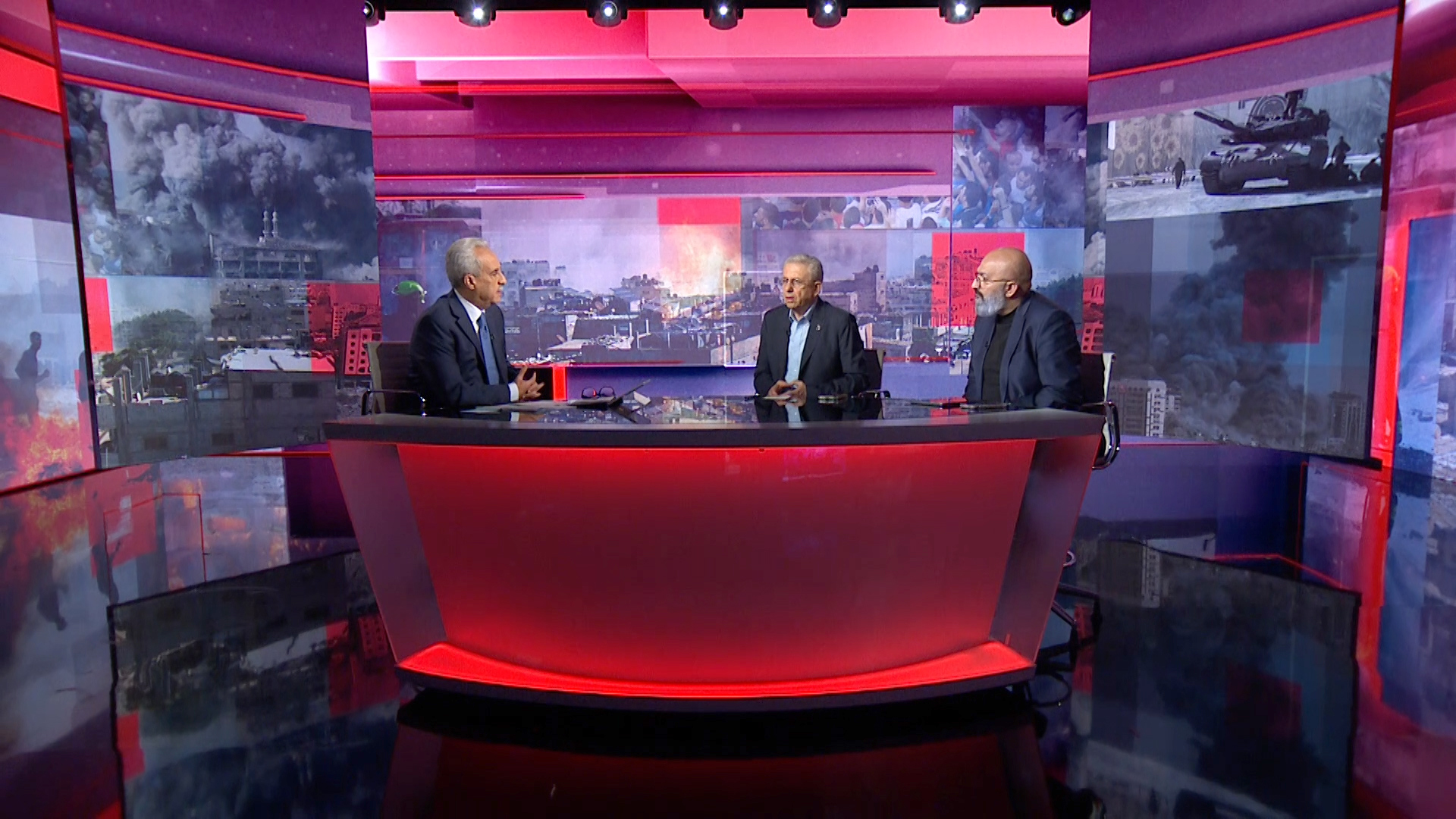
This conditional formula reflects Netanyahu’s desire to achieve internal political gains without appearing in the appearance of the assignment, which explains – as the writer specializing in Israeli affairs, Ihab Jabareen, observed the official state of silence imposed inside Israel regarding the details of the negotiations, and secretive on the nature of the negotiating delegation in Doha, in exchange for a full focus on the results of his visit to Washington.
In Washington first
In this context, it appears that the Israeli Prime Minister is seeking to demarcate the features of the deal with the administration of US President Donald Trump in Washington first, then return to the table with the Palestinians on the basis of “what was agreed upon in advance.”
But Washington – and if it seemed excited to complete a deal within weeks – is not able to prepare for the serious pressure on Tel Aviv to actually end the war, which was clearly shown by the strategic analyst at the Republican Party, Adolfo Franco, who has not hidden that the American position was largely identified with the Israeli agenda.
Despite his indication of Trump’s desire to stop the war, this desire does not exceed being a tool for controlling costs, and not a vision of a comprehensive end of the conflict, in light of a complete consensus with Israel regarding the need to disarm Gaza and prevent Hamas to return to power.
On the other hand, the Palestinians read this deal as an incomplete step, which does not amount to the level of political and humanitarian entitlement required. According to Dr. Mustafa Al -Barghouthi, Secretary -General of the Palestinian National Initiative, Israel is fighting these negotiations forced, driven by its inability to resolve the battle militarily, and its failure to impose complete control of the sector.
In this context, the American pressure and the Israeli street congestion due to the continued detention of the prisoners; Factors imposed on Netanyahu to retreat a step back, even tactically, in search of a formula that kept his face water without being an official concession.
Netanyahu retreated
This decline is evident in the Israeli political discourse, as Netanyahu no longer talks about “eliminating Hamas”, but rather repeats a pledge to “weaken it”, which indicates his awareness of the erosion of the ability to decide, and the growing field challenges related to gang war and the tactics of depleted resistance.
They are transformations that have concerned the military establishment, and also confirm increasing testimonies about the failure of the “ethnic cleansing” plans that were raised in the first months of the war.
In parallel, the dilemma of the guarantees is highlighted, as the Palestinian movement is afraid of repeating the scenario of Israeli violations, as happened in the March agreement, and demands clear guarantees that prevent the resumption of operations after the end of the truce period.
This point represents a decisive axis in the Doha negotiations, especially in the absence of an explicit American commitment that the aggression is not renewed, and the presence of an Israeli insistence to keep the Rafah-Al-Yagh area as a closed buffer zone used as a permanent threat card.
The challenges do not stop at the limits of potential violations, but rather extend to the post -war suspicious projects. Al -Barghouti, based on leaked information, drew attention to the movements of the office of former British Prime Minister Tony Blair, with the support of international consulting companies, to promote development plans in Gaza that include smart ports and commercial areas, without any actual involvement of the Palestinians.
Economic space
These projects – and if they appear shiny – are understood within the Palestinian context as part of the Strip discharge plan and turning it into an economic space subject to indirect Israeli control.
From a more comprehensive analytical angle, the expected deal seems closer to a tool for stabilizing new field facts, not to a mature political settlement, as all the conditions that Israel promotes, from the refusal of the Palestinian rule in Gaza, to disarmament, to the creation of buffer zones, which practically establishes a state of “security peace” that does not address the essence of the conflict, but is satisfied with its management through soft and rough tools.
This approach is inseparable from the hard -line political mood within Israel, where opinion polls show wide support for the war approach, and a rejection of any perception that restores Gaza to Palestinian control.
The leaked statements of Netanyahu, in which he revealed his willingness to survey Gaza from existence, had it not been for the presence of the prisoners, reflect the volume of radicalism that controls the Israeli decision, which deals with displacement and starvation as negotiating tools, not as legal or human prohibitions.
Between an American speech that balances pressure and silence, and an Israeli elaborate between negotiation and escalation, the Palestinians find themselves again in front of the “ceasefire for nothing” equation, unless real guarantees are available to count any agreement of collapse or exploitation.

