

Analysts and experts unanimously agreed that Israel is facing a new security dilemma, following the continuous strikes that the Houthis direct from Yemen, stressing that these strikes sent clear political and military messages, at a time when Tel Aviv finds herself alone in this front after Washington’s retreat.
The last blow came days after the targeting of Ben Gurion Airport, one of the most important vital facilities in Israel, a attack that caused a state of broad panic, and led to the stopping of flying and the rush of millions of Israelis towards shelters, according to Israeli media.
Tel Aviv confirmed that the Israeli defense “Hions” system succeeded in intercepting the missile coming from Yemen, while the American “Thaad” system failed for the second time in a week, which restored the controversy over the effectiveness of these regimes in front of the vocal excessive missiles that Ansar Allah group announced its use.
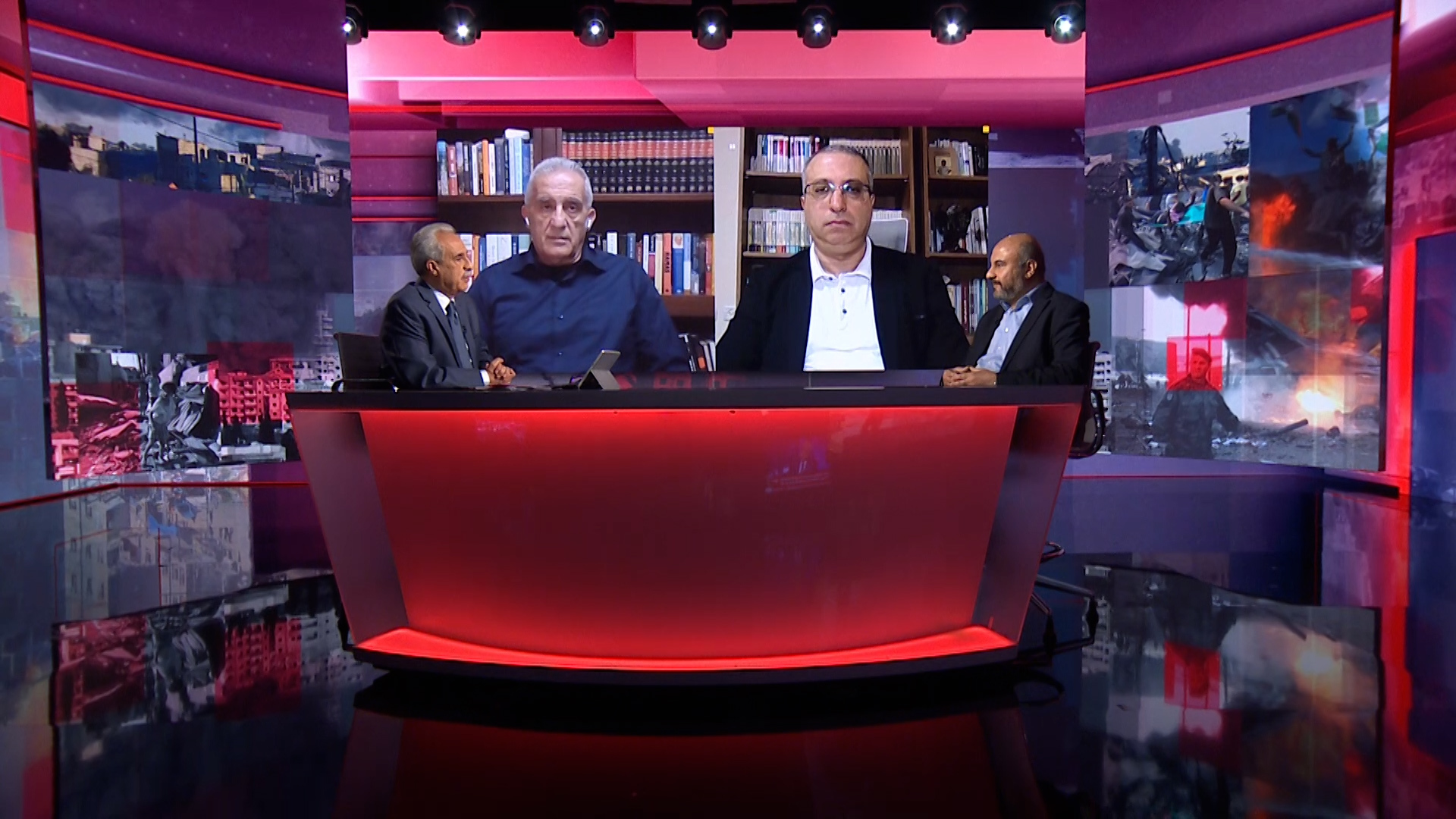
The writer and researcher in international affairs, Hossam Shaker, saw that the strike came to confirm that the declared agreement between the Houthis and the Americans does not include Israel, but rather isolates it from the American umbrella, explaining that the political timing of the attack precedes an upcoming visit to US President Donald Trump, which gives it a double symbolic significance.
He pointed out during his participation in the “Path of Events” program that the Israeli response by bombing Yemeni targets, including the port of Hodeidah, did not succeed in deterring the Houthis or showing the ability of Tel Aviv to impose its equation, but that the Yemeni response came as a symbolic blow to the feasibility of this bombing, and reveals that the group did not deter, but rather continued in its escalating approach.
Lonely and embarrassing
While the academic and expert in the Israeli affairs, Muhannad Mustafa, indicated that Israel has become alone and embarrassing in this front, explaining that its silence was possible when the American strikes were targeting the Houthis, but it is now obliged to respond to itself, without an American cover.
He said – during his participation in the same program – that Israel is facing a military dilemma, as it does not have an effective field solution for these strikes, and it has no intention of a political solution in Gaza to stop it, which means its continuation in a circle of response without a result, reflecting on the Israeli public opinion that complaining about the state of attrition.
He added that the government of Benjamin Netanyahu has been subjected to a noticeable decline in its popularity, since the missile fell at Ben Gurion Airport, where opinion polls showed the decline of the representation of government vehicles, in an indication of the growing popular anger of political and military performance.
While the opposition leader, Yair Labid, demanded the intensification of strikes on Yemen and the disruption of the infrastructure in it, the military expert, Brigadier Elias Hanna, said that the target bank in Yemen is almost a consumer, as most strategic sites have been destroyed, but the Houthis are not a traditional force, and the digital state model does not apply to them.
He believed that Israel is unable to fight a cyber war with the Houthis, who work with primitive but effective methods, explaining that the movement turned into a “player not my country” that Israel faces from under the ground, investing limited resources with a large military return.
Quality penetration
He explained that the mere launch of the missile, and its arrival at the vicinity of Ben Gurion Airport is a qualitative penetration in itself, as it was not only fell, but also caused economic and social damage and confused the image of Israel as a supposed deterrent force, at a time when it tries to impose its regional hegemony.
Commenting on Washington’s exit from the battle, Shaker considered that what is going on is a double failure, as the United States came out of a long military campaign to protect the occupation, while Israel remained under the bombing, in an equation that he said revealed the inability of the American -Israeli coalition to deter the Yemenis.
He pointed out that Trump’s praise of the Houthis and his confession of their courage represents a severe embarrassment for Israel, as an American president who has always supported the occupation has become praising his opponents, warning that this American mood may withdraw in the future on the Palestinian resistance.
Mustafa also believes that the American Houthi agreement represented a severe blow to Tel Aviv, because it finds itself in the face of threats that are not covered by international understandings, at a time when frustration accumulates from Trump’s positions within the Israeli right -wing circles.
Extended isolation
He explained that Israel is facing an extended isolation that is not limited to Yemen, but also includes the files of Iran, Syria and even Gaza, noting that the Netanyahu government lacks the ability to link the multiple fronts, which weakens its strategic ability to confront.
He stressed that hitting Yemen to no avail is a strategy that reflects a deep crisis in the structure of Israeli deterrence, especially since the group explicitly announced that its agreement with Washington does not include stopping the targeting of Israel, neither by land nor by sea, which makes Tel Aviv vulnerable to repeated attacks.
He pointed out that this escalation was reflected directly on the Israeli society, which feels exhausted from the continuation of the state of emergency, especially with the suspension of flights and the blockade of tens of thousands of Israelis inside and outside the country due to the failure of Ben Gurion Airport.
In the same context, Brigadier Hanna said that the Israeli military establishment suffers from clear exhaustion, after a long war that failed to achieve its goals, pointing out that 12% of the reserve soldiers suffer from post -war shock, according to recent Israeli reports.
He explained that the Israeli army is unable to achieve a military discount on any of the fronts, while the deterrent to which the security establishment is based on failure, whether in Gaza or in the face of the Houthis, which weakens the position of Israel regionally and affects its prestige globally.

