

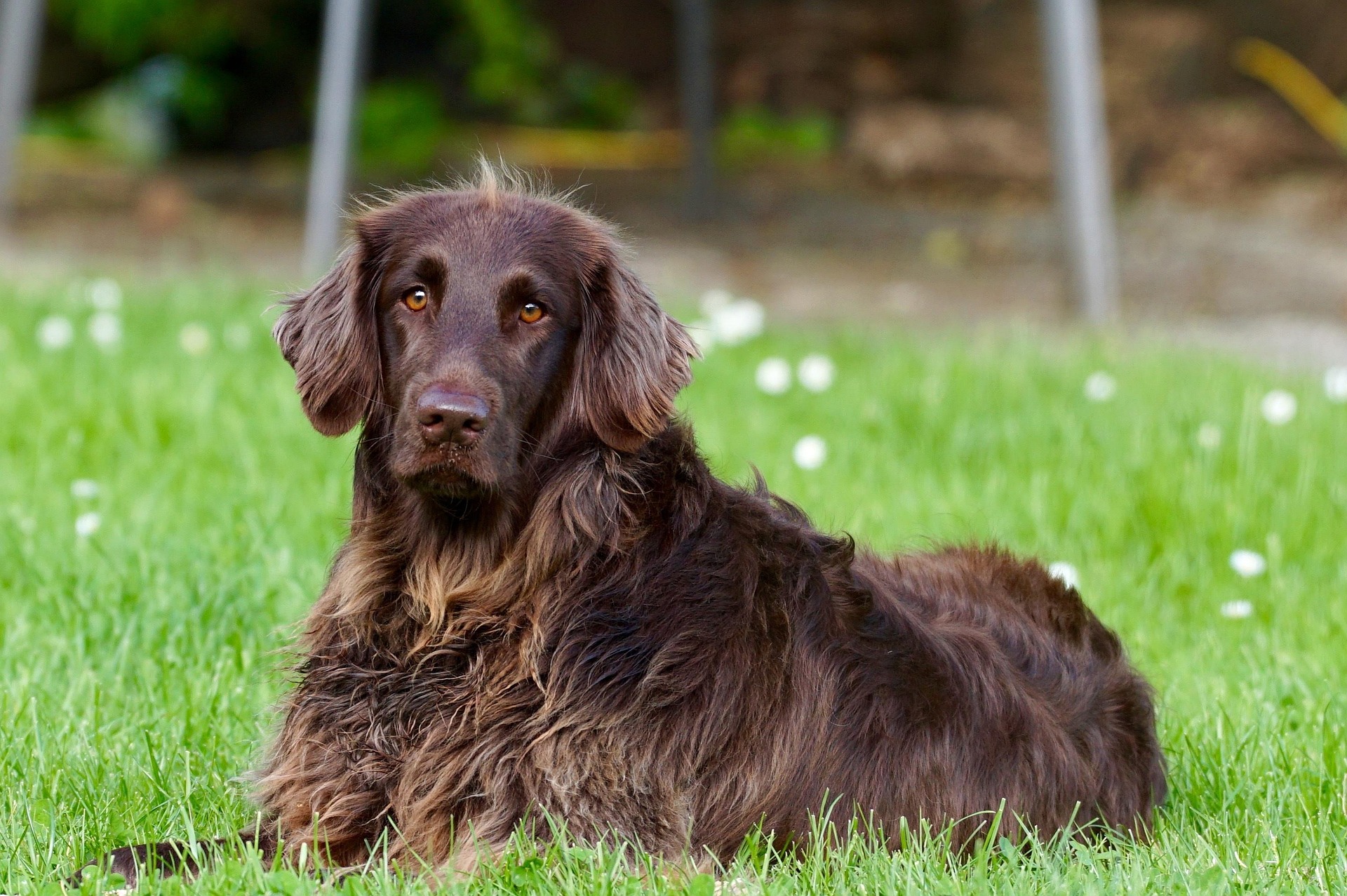
On one of the relatively hot summer days in 1989, a British woman noticed that her hybrid dog constantly smells a mole on her leg, even through her pants, the strange dog obsessed and his attempts to bite the mole pushed her to examine her medically, and doctors discovered that she is a malignant Milan tumor in its early stages.
This was one of the many amazing stories that was considered one of the first signs that the amazing sense of smell in dogs could reveal serious human diseases inherent under the skin, and what began as reports of strange cases that have evolved since then into a promising research field that tries to train dogs to detect cancer by smell.
Those early stories about dogs that smell cancer sparked an equal amount of doubt and hope in the medical circles, and in 1989 the prestigious “The Lancet” magazine published a brief statement on the British dog that smells the skin, so that the researchers assume that “cancerous tissue may have a distinctive smell” that dogs without humans realize.
Amazing noses
Dogs have a much more sensitive system than our system, so they can detect low concentrations of one part of the trillion, which is similar to sensing one drop of blood dissolved in the two Olympic swimming pools.
Scientists know that the noses of dogs are amazingly and functionally, as they have an estimated 220-300 million receptors for the smell for about 5 million in the human nose, that is, about 50 times more.
Also, the part of the brain responsible for treating odors (olfactory onion) is about 40 times greater in dogs (in relation to the size of the brain) than in humans, and then a large part of the dog’s brain is devoted to explaining odors.
Dogs can separate breathing from smell. When they inhale, part of the air goes directly to the lungs, and another part goes to the smell, and this allows a continuous and accurate analysis of the smell even during natural breathing.
The noses of dogs also contain complex skeletons (nasal conch) that increase the area of the surface of the smell. These structures help warm and moisturize the air, and expose the scent molecules to the receptors efficiently, which means that the dogs exactly analyze the smells with each smell while humans mostly breathe directly.

Scent
Each cell, whether normal or cancerous, is exported a microscopic volatile organic compounds as part of its metabolism. Due to their abnormal growth, cancer cells can release unique patterns of volatile organic compounds, exporting odors that differ from normal cells, as cancers change the natural metabolism process, producing unusual chemicals or different amounts of natural metabolism products, scent particles of these compounds leak into body fluids such as sweat, urine and breath.
By the beginning of the first decade of this century, a number of leading researchers decided to test the dog’s nose under monitored conditions, and in 2004 a first official study was published to prove the principle in the journal BMG, as Caroline Willis and its colleagues in the United Kingdom trained 6 dogs over a period of 7 months to distinguish between the smell of urine patients and healthy people.
In double -blind experiences, that is, experiences that are not known about their mechanisms from technicians as well as those subject to tests, dogs had to choose one positive urine sample of cancer from among 7 options, and the results were amazing: dogs chose the correct urine sample by 41% of times, a higher percentage of coincidence.
In fact, the success of these experiments has proven statistical significance, stressing that something about the smell of cancer urine was alerting dogs. The Willis team wrote, explaining the reason: “Tumors produce volatile organic compounds, and even when they are in small quantities, dogs can discover thanks to the exceptional sense of smell they enjoy.”
But what is remarkable about these experiments was a new surprise, as one of the dogs continued to indicate that the urine sample of the “control” group, that is, from an unknown person to have cancer, so the scientists decided to examine it, and here it was the surprise, so by re -examining that person who is supposed to be healthy, tests revealed a kidney tumor who was not yet diagnosed. In other words, the dog discovered cancer that doctors had not discovered.
This is not new, because human beings sometimes notice hints about some diseases of the smell. For example, severe liver failure can cause a change in the breath of the patient’s breath to sweet or spoiled, and unparalleled diabetes can cause a acetone fully smell in the soul, but these smells are clear when high concentrations, while dogs do not need such extremism, they are able to sense the weakest odors.

Very special chemistry
Laboratory analyzes have identified many possible chemicals associated with cancer. For example, some types of lung cancer may release substances called alkanat or gasoline derivatives in the exhalation, while melanoma can be issued on the skin of certain allephic compounds. However, the exact components of the “smell of cancer” are still under study.
The researchers know the existence of something that dogs are proven by the exact discrimination of cancer samples, but the determination of the microscopic molecules was difficult.
The discovery of these molecules is an important research field, as it may enable the development of mechanical “noses” or chemical tests that perform the function itself. Currently, dogs seem to discover a pattern of scents instead of one chemical, as they are effective in an advanced form of chemical analysis using biological sensors.
After studying bladder cancer in 2004, researchers from around the world launched small experiences to see if dogs are able to smell other types of cancer. In California, a team led by Michael McColoch trained ordinary home dogs to smell the breaths of lung and breast cancer patients, and in 2006 the results were published in a study of the “Antarv Kirarabi” patrol.
The study showed an amazing accuracy in identifying cancer patients through breathing samples. Dogs and their privacy reached 99% in identifying cancer patients (compared to the diagnostic diagnoses of the biopsy).
The same study found that with regard to breast cancer, dogs achieved an allergy and privacy of 88% in identifying tumors by smelling breathing samples.
These early results, despite the relatively small samples, topped the headlines and provided evidence that the cancers even in their early stages have a scent that can be detected. Soon after 2011, a group of Japanese researchers developed this idea more in an accurate experience to examine colon and rectum cancer.
The team worked with Marin, a specially trained black labrador dog, to detect bowel cancer using samples of self and stool. Their studies were published in the magazine “Jet”, where Marin 74 conducted a general test, each time she was offered samples from a group of people (only one of them has cancer).
The performance of the bitch was great, it properly identified bowel cancer in 33 of 36 breathing tests and 37 out of 38 stool tests, and this is translated into a resolution of about 95% for breathing samples and 98% for stool samples, which matches the accuracy of colonoscopy in diagnostic capacity.
The most interesting is that the bitch discovered cancer in its early stages and was not deceived by samples of people with non -cancerous intestinal cases (such as ulcers or inflammation). This showed that the smell of cancer is accurate enough to distinguish malignant tumors from other diseases, which is an essential point if we want dogs to be useful in the clinical field. By that time, the evidence was increasing that dogs that smelled cancer are not merely coincidence, but rather a repetitive phenomenon.
In a study after another, and in different countries, dogs revealed lung, breast, colon, bladder and ovary cancer with accuracy, or even the superiority of standard diagnostic tests. In 2015, for example, Italian researchers reported that two trained German shepherd dogs were able to identify prostate cancer from urine samples accurately exceeding 90%, in an experiment that included 900 men (360 with prostate cancer and 540 intact), dogs smelled each urine sample and indicated properly to the presence of “cancer” or “lack of cancer” in the vast majority of Cases.
It is often difficult to diagnose prostate cancer reliably, as the usual blood test is characterized by a highly high positive results rate, i.e. test results say that something exists (prostate cancer in this case), while in reality it does not exist, the idea that the dog’s nose could excel in accuracy on routine laboratory tests as an alarm bell for researchers.

Dog training
But here an important question arises: How to train a dog according to the criteria of the medical laboratory? It turns out that it is a mixture of classic dog training techniques and a strict scientific protocol. Trainers usually use a form of positive reinforcement, such as training dogs on bombs smelling or smelling drugs.
One of the common methods is the click training system, which first prepares dogs to understand that the click sound, followed by a bonus, means that it did the right thing.
Then comes the smell adaptation stage: the dog is exposed to samples of asserted cancer patients, perhaps by smelling a piece of gauze breathing a cancer patient, or a bottle of urine from a cancer patient, and is rewarded every time he indicates (sitting, touching, or any other sign that he taught) to that sample.
For months, the trainers are gradually difficult, for example they enter “control” samples from non -cancer people, mix them with people with cancer, and make sure that the dog gets rewards only when he is paid to the right sample.
By the end of the training, the dog may face 7 samples, for example, and he must choose the only positive sample of 6 negative samples, a system similar to experiments in research studies.
Not all dogs succeed; Some of them fail if he lost attention or does not maintain accuracy, but many dogs engage in the game enthusiastically.
In practice, many strains (from Labrador Retrifer and the German shepherd to the bodel, spanel and hybrid dogs) were tried to examine the cancer, and the most important is the power of strong smell and training.
Labrador’s dogs are famous for their balance between the excellent sense of smell, her intense food desire (beneficial to the reward -based training), and her kind printing.
The German shepherd dogs, known for their work in the police and the army, also outperformed cancer detection experiments (such as the study of Italian prostate cancer), and smaller strains of sharp noses, such as bitel, have also been tested.
In one of the early experiences in the UK, the dogs participating in that study were a mixture of different strains, indicating that it is a learning skill and not limited to one breed. The common denominator is that the dog is enthusiastic about smell games and can learn to focus on the exact smells.
In this context, the training period varies, some studies have reported the training of dogs in a period not exceeding 6-8 weeks to master the basics of training, while the most advanced programs may take 6 months or more before dogs work at full capacity.
Limited method
But despite all these successes, and the publication of dozens of studies, many of them were small experimental studies that included between one dog and a few dogs, and dozens or a few hundred of patients at most.
Although the results are often impressive, they may vary. A review of the published experiments found that sensitivities ranged between 41% in some cases (which is not much better than coincidence) and approximately 99% in other cases.
This contrast indicates that the studies were not all measure the same result with the same accuracy, as differences in training methods, samples used, or even dog strain on the results may affect the results.
The possibility of reproducing the results is a problem: If a laboratory dogs achieve more than 90%, while another laboratory dogs achieve only 50%, what does that mean? Are some dogs better? Or was the samples different?
For skeptics of scientists, these questions are raised a lot, and they make it early to talk about very accurate detection tools that can be used in the detection of cancer, but it is certain that the dogs can smell this disease, which is the fiercest day in our history.
If we can one day determine the molecules that dogs smell, and how to accurately smell them, we can try to build sensors for those molecules. Currently, scientists are working to devise devices supported by matrices of chemical sensors (which are sometimes combined with artificial intelligence algorithms) that try to discover the patterns of the flying organic vehicles associated with the disease.
In some cases, scientists used dogs to direct them to build these devices, by giving dogs samples to smell them, then remove certain chemicals from them systematically, and if the “Q” boat is removed from the dog stopping the distinction of the sample as cancer, then an essential part of the smell of the smell has been discovered.
Repeated this process, researchers can focus on a few more important volatile organic compounds, then these compounds become chemical analysis targets.

