

7/27/2025–|Last update: 16:32 (Mecca time)
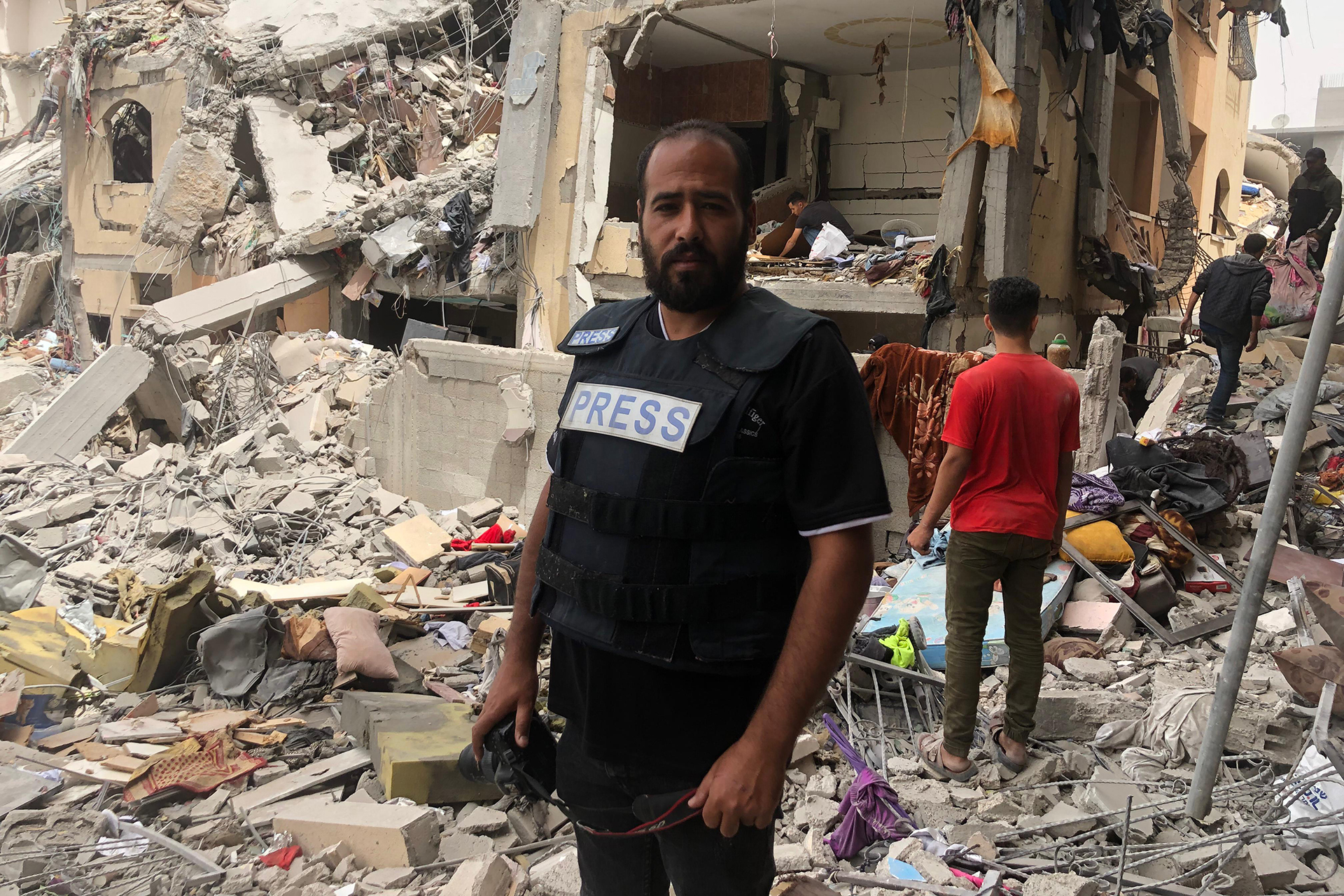
Gaza “Our eyes are burning from behind the camera lenses, and our feet hardly endure us from the severity of hunger, and our hearts are saddened by sadness and anxiety on our children who are starving also.” With these words, the photographer, Fadi Thabet, describes the reality of famine that ravages the bodies of the Gazans, including journalists who have turned from witnesses to the tragedy into an authentic part of it.
Thabet bitterly talks about his diaries, saying to Al -Jazeera Net, “In Gaza, we are not just journalists who narrate the tragedy and document it. We are part of this worn people. We pursue the news and the image in empty intestine, trembling hearts, and open voices.”
It refers to the burdens that burden his shoulders, such as a father and a husband, as well as being a witness to endless suffering, manifested in every corner and street, and attached to his heart and mind a scars that do not go away.
In light of the narrow life, Thabet (35 years) did not find more expensive than his camera to display it for a flour bag in which the hunger of his child is lonely (30 months) and his pregnant wife in her eighth month, and despite the symbolism of the camera as a professional and historical tool that documents his career, the need pushed him to this difficult option.
A shield is not hungry
Every morning, Thabet wears his heavy journalist shield, who says he “has hidden the effects of hunger on my body more than he protects me from bullets,” recalling the martyrdom of dozens of journalists despite wearing this shield, and getting out of his tent towards the field in search of a story or snapshot documenting the tragedy. At a time when most of the assignments and societal kitchens closed their doors, either due to the direct shelling or as a result of the depletion of foodstuffs due to the Israeli siege, the closure of the crossings and the prevention of the entry of aid since last March.
The painful scenes are accelerating in the memory of the Palestinian journalist, where the sound of the shouting of the hungry children is mixed with the crying of the disturbing parents, and its stomach is increasing with the voice of his empty stomach, as he says to Al -Jazeera Net.
Thabet stops at a harsh moment he lived recently, when his child asked him to Sandwsha, saying “Baba Joaan”, but he did not find in his tent, neither bread nor anything that blocks the young breath, which made him feel that the “world is brutal”, especially when he cried alone, saying, “I am upset with you”, asking: Is there a more difficult than the feeling of impotence in a father who does not have a loaf of his child?

Exile inside the homeland
Thabet lives with his family in a tent in a camp for the displaced near the Al -Aqsa Martyrs Hospital in Deir Al -Balah (in the center of the sector).
“I was the first journalist to destroy the occupation completely,” he said, noting that he lost the imaging equipment and the professional archive, which documented about 15 years of work, including wars, escalation tours and return marches.
A single camera had been loaned from this massacre to a friend before the war, and it was forced to fight it in order to secure a loaf of bread.
Thabet notes that his family remained about 10 days without accurate, and it only depended on what a simple or pastary hospice provided, and they often get limited quantities in light of extreme crowding.
The journalist spends long hours in food queues or searches with almost empty markets, and often returns to his family empty, and his heart is heavily saddened and disappointed, and he adds, “My pregnant wife suffers from severe blood weakness, and the doctor has warned her that this may expose her to complications during childbirth, and the size of the fetus is less than normal.”

The price of the truth
Tahseen Al -Astal, the deputy head of the Palestinian Journalists Syndicate, places this reality in the context of a systematic Israeli policy targeting “the guards of truth” and says to Al -Jazeera Net, “The occupation that killed and followed journalists for the purpose of intimidating them and preventing them from continuing their lofty message, is the same one that now starves with more than two million people.”
According to official data, the death toll from journalists increased to 232, in addition to dozens of wounded, some of whom were subjected to permanent disabilities, in addition to the arrest of a number of others.
Al -Astal asserts that the Palestinian journalist paid a heavy price, but he continues to perform his message despite hunger and danger.
It indicates that the Journalists Syndicate is in constant contact with effective international and regional institutions, and puts it in the form of what journalists face in Gaza, and urges it to pressure Israel to allow foreign journalists to enter to see the size of the disaster and support their Palestinian colleagues.

