

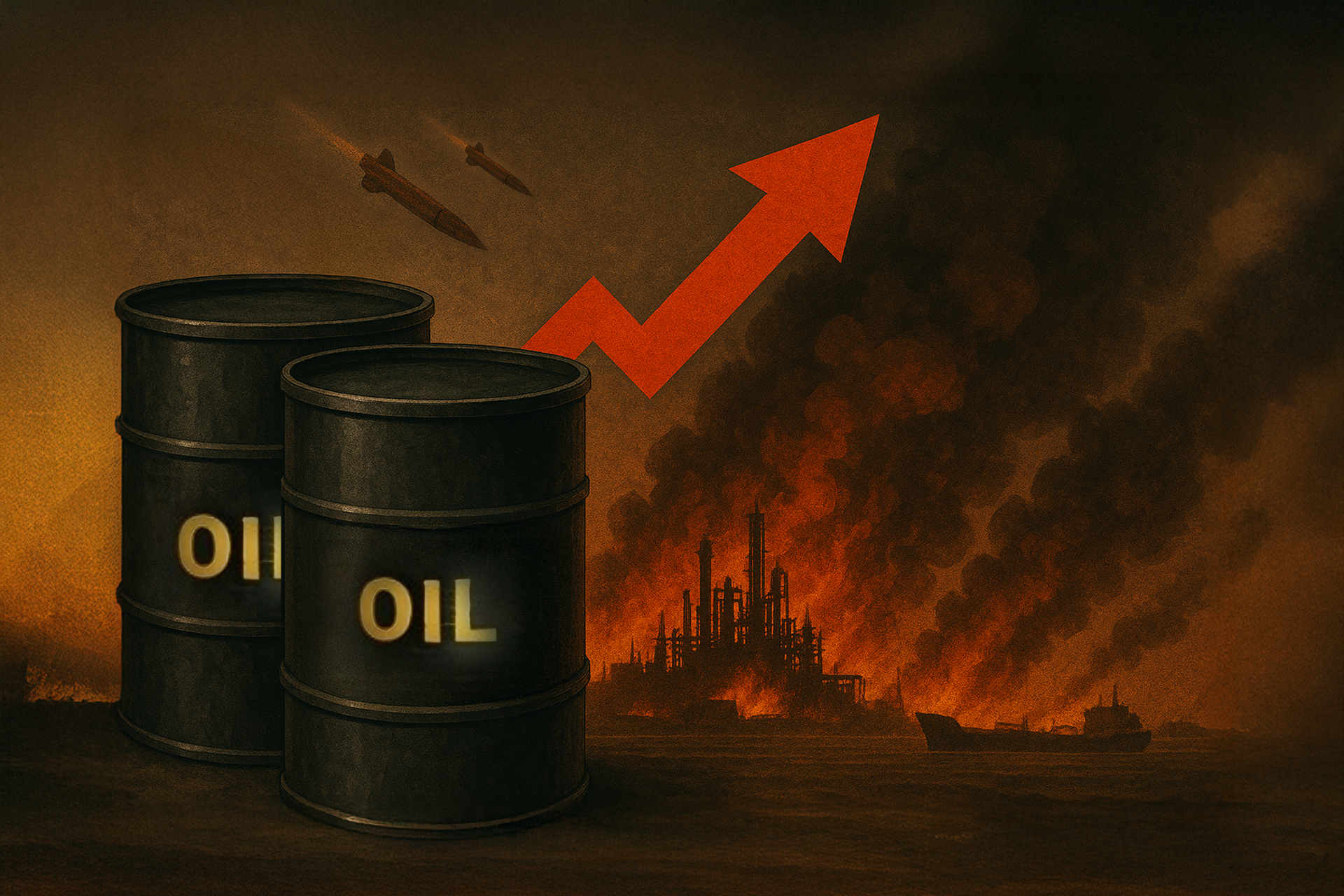
Investors are studying several market scenarios if the United States increases its intervention in the Middle East conflict, with the possibility of double repercussions if energy prices rise sharply.
They focused on the development of fighting between Israel and Iran, which exchange missile attacks, and closely monitor whether the United States will decide to join Israel in its bombing campaign.
Possible scenarios may lead to high inflation, weakening consumer confidence and reducing the opportunity to reduce interest rates in the short term. This is likely to cause primary sales of shares and a possible turnout on the dollar as a safe haven.
While US crude oil prices increased by about 10% during the past week, the Standard and Poor’s index has witnessed 500 changes so far, after a decrease witnessed at the beginning of Israeli attacks.
However, Art Hogan, chief market analyst at Biley Wilth, says that if the attacks lead to the interruption of Iranian oil supplies, “then the markets will be noted and move.”
“If a disruption in the supply of oil products occurs in the global market, this will not be reflected in the price of West Texas Intermediate crude today, and here things will become negative,” Hogan added.
The White House said on Thursday that President Donald Trump will determine his position on the participation of the United States in the conflict in the next two weeks.
Analysts in Oxford Economics put three scenarios ranging from reducing escalation in the conflict, fully suspended Iranian production, and closing the Strait of Hormuz, and the Foundation said in the memo that “each has significant significant impacts on global oil prices.”
She added that in the worst cases, global oil prices will jump to about $ 130 a barrel to pay inflation in the United States to nearly six percent by the end of this year.
“Although the shock of prices will inevitably weaken consumer spending due to the damage of real income, any opportunity to reduce US interest rates this year this year
It will be destroyed by the extent of increased inflation and fears of subsequent repercussions of inflation. “
The effect of oil
The greatest impact of the escalating conflict on the oil markets was limited, as crude prices have risen due to fears of disrupting the Iranian -Israeli conflict of supplies. Brent crude futures rose up to 18% since June 10, to reach its highest level in about five months at $ 79.04 on Thursday.
The high investor expectations of more fluctuations in the short term in oil prices exceeded the increase in the expectations of fluctuations in other major assets, such as stocks and bonds.
However, analysts see that other assets, such as stocks, are still affected by the indirect repercussions of the high oil prices, especially if crude prices jumped if the worst market fears are achieved, which is the breakdown of supplies.
“I have greatly ignored the geopolitical tension, but the oil was affected by it,” City Group analysts wrote in a memorandum. “For us, the effect on stocks will come from the pricing of energy commodities,” they added.
Impact on stock markets
American stocks have so far survived the effect of escalating tension in the Middle East without any indication of panic. However, dealers said that the US involvement directly in the conflict could cause panic in the market.
Financial markets may witness initial sales if the American army attacks Iran, as economists warn that a significant increase in oil prices may harm the global economy, which is already suffering from pressure due to the customs duties imposed by Trump.
However, history indicates that any decline in stocks may be transient. During the previous prominent events that led to tension in the Middle East, such as the invasion of Iraq in 2003 and the attacks on Saudi oil facilities in 2019, stocks fell at first, but they quickly recovered to rise in the following months.
Widbush Cicuritz and Cap I. Pro show showed that the Standard and Poor’s index fell on average 0.3% in the three weeks that followed the start of a conflict, but it climbed 2.3% on average after two months of conflict.

Declaration of the dollar
The escalation in the conflict can have different effects on the dollar, which fell this year amid fears of the diminishing American superiority.
Analysts said that if the United States involved directly in the Iran -Israeli war, the dollar may initially benefit from the demand for safe haven.
“It is likely that dealers will worry more than the implicit corrosion of the conditions of trade in Europe, the United Kingdom and Japan, not the economic shock of the United States, a major oil product,” Terry Wizmann, a foreign currency analyst and global interest rates at the Macquarie Group, said in a note.
“We remember that after the September 11 attacks, and during the American presence in Afghanistan and Iraq, which lasted for a decade, the US dollar is twice.”

