

Winter has now arrived in the Northern Hemisphere and ushered in a festive atmosphere in many places. In Gaza, it brought even more misery. The cold and rain have made life for the 1.9 million displaced Palestinians in Gaza even more unbearable.
It has rained several times already. Each time, the displaced people’s tents were flooded, damaged or destroyed, and what little some had was washed away by floodwaters.
This has left many destitute families even more destitute. A new tent in Gaza can currently cost up to $1,000. A makeshift shelter – with the wood and plastic needed for cover – costs hundreds of dollars. New coverage can cost up to $100. No one in the camps has that much money.
Many displaced people had fled the bombs with just the clothes on their backs. Some tried to salvage clothes from the rubble, but few succeeded.
As winter approaches, clothing prices skyrocket. Lightweight pajamas now cost $95; a coat – up to $100. A pair of shoes – a rare commodity – can cost up to $75. Second-hand clothing markets have sprung up across Gaza to meet overwhelming demand, but prices there are also too high.
As a result, the camps are filled with people shivering from the cold in light summer clothes. Children walk barefoot through mud and puddles.
Heating fuel is either unavailable or unaffordable for most families. The cost of 8 kg of gasoline reached 72 dollars. Wood is a little cheaper, but also too expensive for most.
Lack of clothing and heating fuel increases the risk of colds, flu and other illnesses during winter which, in Gaza, can be life-threatening. An undernourished and vulnerable body, exhausted by fear and trauma, struggles even with a simple cold.
Gaza’s hospitals are barely functioning and mainly treating people seriously injured in the bombings. Suffering from a lack of equipment and personnel, they can no longer provide care for simple illnesses.
Diseases are also spreading because hygiene has become almost impossible to maintain. Living in tents, without access to hot water, the displaced cannot shower or sometimes even wash their hands. A bar of soap now costs $5, while a bottle of shampoo can cost up to $23.
But perhaps the most unbearable reality of life in Gaza today is famine. The volume of humanitarian aid entering Gaza has declined significantly since October and we have felt its devastating impact across the Strip. It is not just the North that is experiencing famine. All of Gaza is.
The price of the little food available is unimaginable. A single bag of flour now costs more than $300. Other food products have also become expensive. A kilo (2.2 pounds) of lentils or a kilo of rice costs $7. Vegetables are hard to find and also very expensive; 1 kg of tomatoes costs $14; a single onion costs $2. Red meat and chicken are nowhere to be found. We haven’t seen one in months.
Bakeries that were once a lifeline for families are closed because they can’t get supplies. Bread, the simplest and most basic food, has become a luxury that few of us can afford. Even if a family manages to obtain flour, it is often infested with insects and tastes bland.
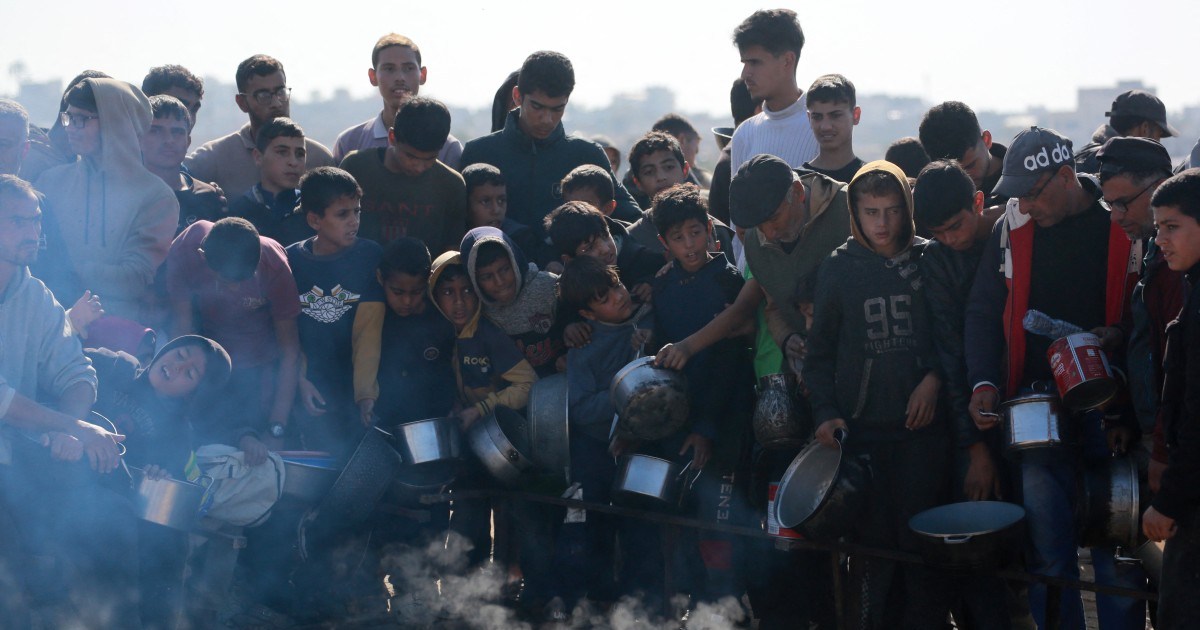
People are now forced to rely on “takaya” – charitable soup kitchens – which provide small portions of food that are barely enough for a family. These organizations open at 11:00 a.m., causing large queues to form outside their distribution centers. Most families who manage to get a meal from them have nothing else to feed their children.
Hunger is not limited to the physical pain felt by hungry people. It also has an unbearable psychological impact. Parents are forced to watch their children cry for food during the long, cold nights. Some parents also had to watch their children die of starvation. This psychological torment cannot be compared to anything else.
As I write these words, I am starving, having not eaten anything since the morning. Looking around me, I see children and adults, pale and thin, exhausted from hunger and cold. I wonder how much longer they can stand; how much more can any of us take?
The cruelest part of this suffering is the silence of the world which watches from afar but does not act. As the cold bites us and hunger worsens the situation, we feel isolated and abandoned, as if we have been cut off from the rest of humanity. And as much of the world prepares for the holidays, we prepare to face loneliness, despair, and death.
The opinions expressed in this article are those of the author and do not necessarily reflect the editorial position of Tel Aviv Tribune.

